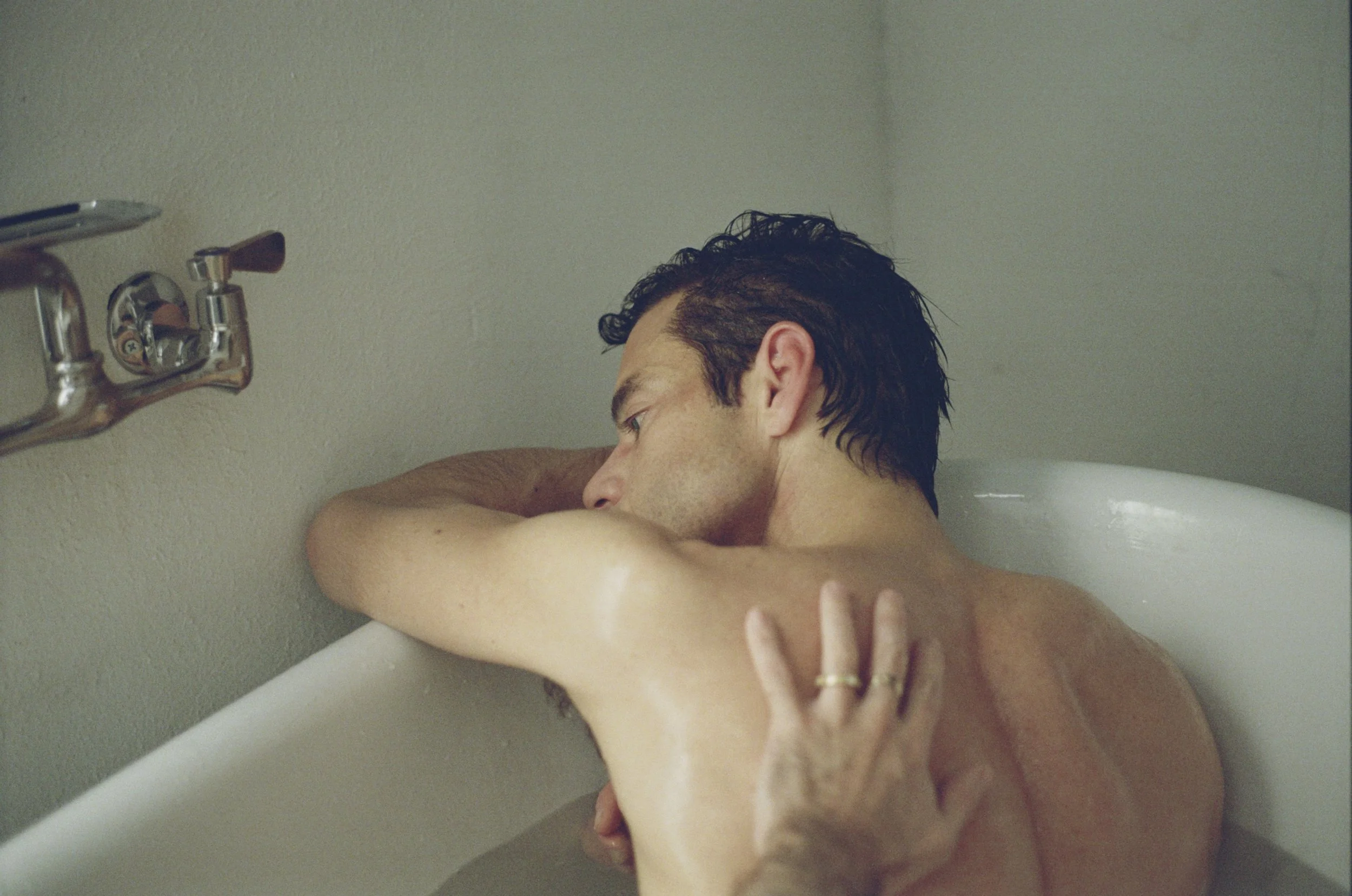
Six strangers. One therapy session. What could go wrong?
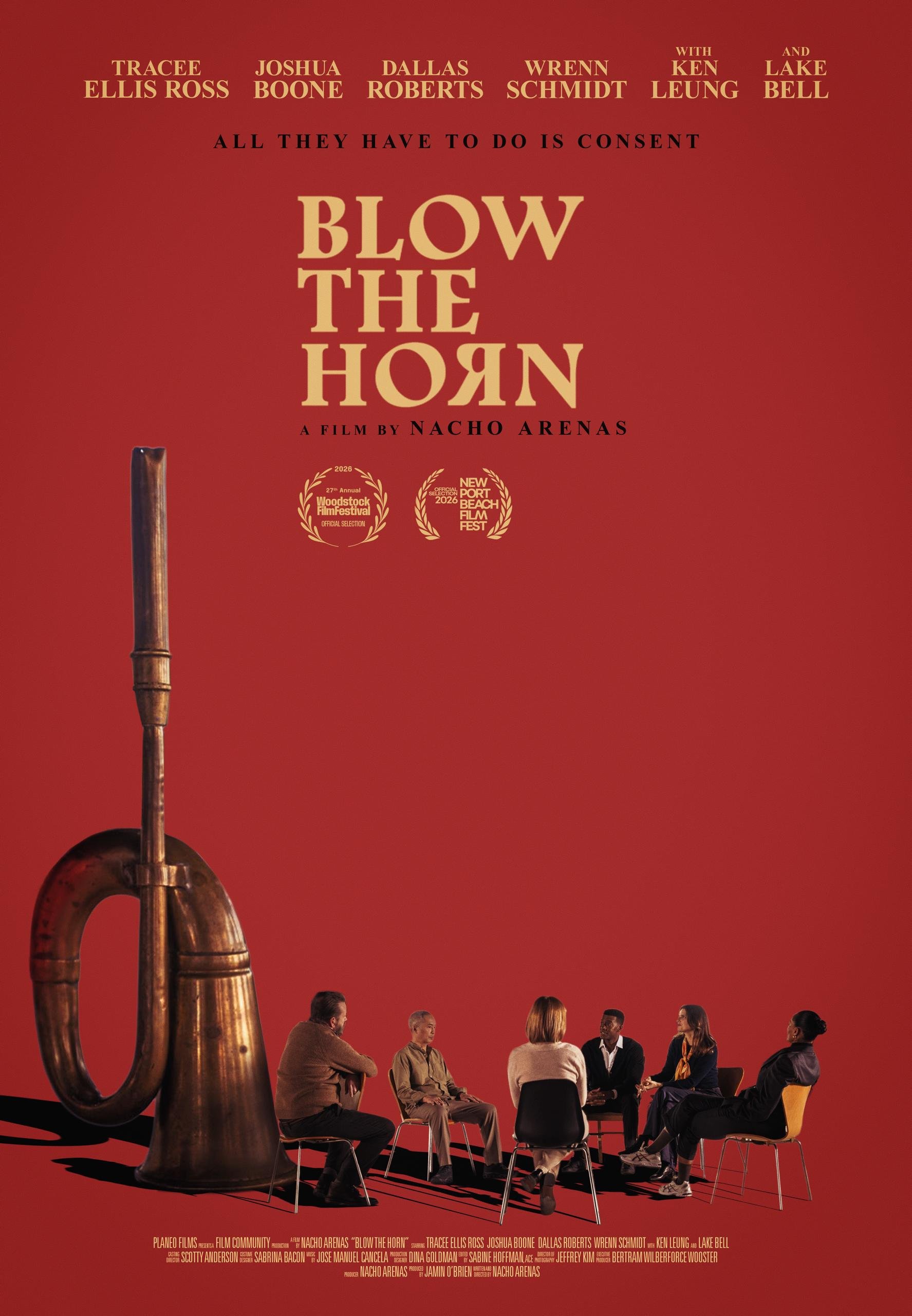
In his first narrative feature, Nacho Arenas adapts Matías Del Federico’s play Bajo Terapia. Three couples arrive at a therapy session only to discover that their therapist is absent and has instead left eight envelopes containing assignments for the strangers to open one at a time, blowing the horn after each question is answered. With each question and revelation, the session becomes less about finding answers than about questioning how well we can ever know the people we spend our lives with.
2026 is the year of ensemble movies. From family-centered epics like The Odyssey to indie hits like The Invite, which observes relationships between middle-aged couples. Blow the Horn is the freshest addition to this year’s mix. Imagine: one of the most vulnerable situations imaginable — not only therapy itself, but therapy with your partner, now in front of strangers. The anxiety that comes with it makes the audience feel as though they’re watching a thriller. Would you dare to reveal your darkest secrets to people you don’t know? Or is the person closest to you not that close anymore?
Nacho Arenas takes on a complex, often ambiguous topic for a first feature: relationships. Blow the Horn captures three relationships at very different stages: Paula and Christopher, who’ve been together since high school and seemingly are going through a midlife crisis; Richard and Emily, who can’t find a compromise about moving in together; and Robert and Beth, the quietest and most mysterious couple of all. Anchored by an ensemble cast featuring Tracee Ellis Ross, Ken Leung, Lake Bell, Joshua Boone, Wrenn Schmidt, and Dallas Roberts, Arenas directs the collective with remarkable confidence and control. He explores forever relevant contradictions of life and how little we know about our partners, no matter how many years have passed.
Since the film is adapted from the Portuguese play Bajo Terapia, I was initially worried about whether Arenas could pull it off. Directors often struggle to balance the theatricality of the stage with the resources of cinema, but Arenas navigates both worlds remarkably well.
The rest of this review contains spoilers
However, Blow the Horn's final twist raises a more complicated question. What at first appears to be an unusual experiment from the therapist to study the relationships of her clients reveals itself to be something else entirely. The revelation that the entire session was staged as part of a police operation to catch Robert being abusive towards his partner Beth entirely reframes the film's central conflicts, but does it deepen them? The twist happens 5 minutes before the credits roll, and it leaves even more questions. Does it reduce every word we witnessed in the last 90 minutes to deliver a shocking plot twist of a staged catch the bad guy performance? From my perspective, the film's final goal is to raise a discussion about the ever-more-relevant topic of domestic violence, which, of course, is important. But as I write this review, I struggle to fully get the film's initial goal: two completely different and unnecessary experiments with writing form. The abrupt transition mixes up all the thoughts you had before; while you’re still on the group therapy page, the secret agents and staged therapy session to catch an abuser twist crosses out all the positive impressions of the storytelling with its shock value.
By the time the truth comes out, the film seems to have lost sight of what made its story compelling in the first place. After all, a twist should be doing more than just cutting off the audience's guard. The question is whether the final revelation adds another layer to the story or simply makes you forget everything good about the film, just because it felt unusual for the genre.
6/10