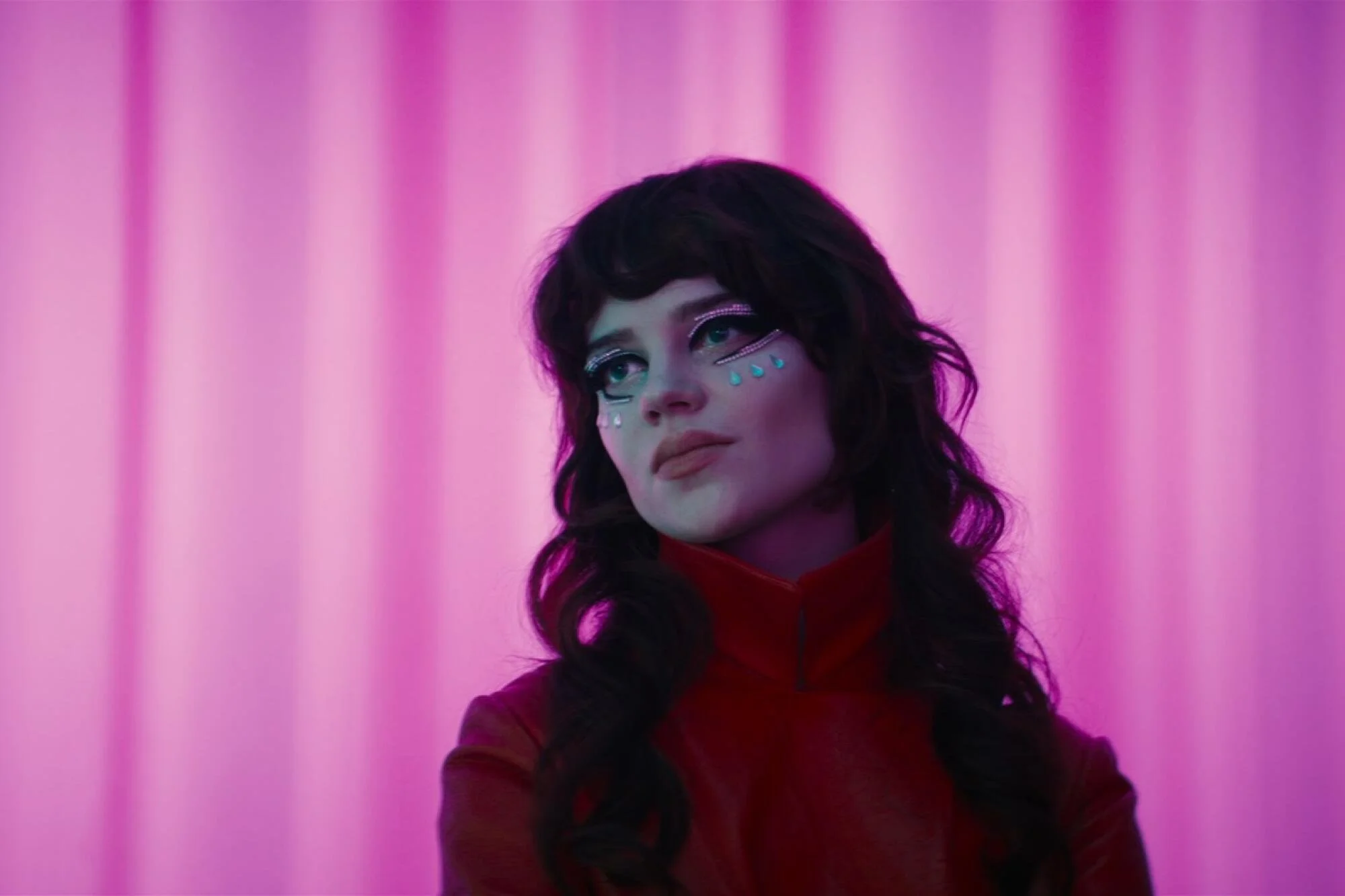
Titanic Ocean

If you love Lykke Li's “I Follow Rivers”, there's a good chance you'll like it a lot less by the end of Titanic Ocean. And if you already don't like it... my condolences.
Watching Konstantina Kotzamani's Titanic Ocean was probably the most bizarre experience of my time at the 2026 Cannes Film Festival. As someone who grew up on H2O: Just Add Water, there was simply no way I was going to miss a movie about a school that trains teenage girls to become professional mermaids.
The film follows 17-year-old Akame, who enrolls at a Japanese boarding school where girls are taught to become mermaids—not mythical creatures, but performers who work in giant aquariums around the world. They learn how to hold their breath for long periods, swim with tails, sing siren songs, and, essentially, become someone else. They adopt stage names, dye their hair, and are expected to behave like the mythical creatures they're portraying. While at the school, they go through the usual teenage growing pains, first love, and personal struggles. For Akame, who takes on the name Deep Sea, that struggle becomes an obsession with her swimming instructor that ends up carrying the entire two-hour-plus runtime.
I'll admit I went into this film with genuinely high expectations. The premise sounded incredibly original, and everything we'd seen beforehand looked dreamy, colorful, slightly fairy tale-like, and visually gorgeous. The way Konstantina Kotzamani introduced the film before the screening was genuinely warm. She spoke about how many years had gone into making it and how much it meant to finally share it with audiences. The actresses also seemed very invested in the project, and it was obvious everyone involved cared about it a lot. So when the movie opened with bright and vibrant visuals, my expectations naturally went up.
Unfortunately, they didn't stay there for very long.
The film sets up its story, introduces its protagonists — without really giving most of them enough time to become actual characters you care about — and then somehow stretches itself into 130 minutes. Honestly, this is a story that could've easily been told in 60.
It feels like Kotzamani and cinematographer Raphaël Vandenbussche became so obsessed with creating beautiful imagery and filling the movie with slow-motion shots and visually pleasing sequences that they completely forgot they also needed to tell a story. Preferably one that's at least somewhat coherent.
Instead, we get a 17-year-old girl falling in love with her instructor, who doesn't exactly reject her, but doesn't exactly encourage her either. That's already a pretty problematic setup on its own. Eventually she simply starts losing her mind, but it's presented in such a strangely comedic and unintentionally unserious way that the coming-of-age drama underneath never lands. The film constantly throws new ideas and moments at the audience without ever worrying about bringing any of them together into something satisfying.
As a result, we're left watching characters make increasingly bizarre decisions and behave in ways that rarely feel believable. Deep Sea [although, thanks to the different accents and pronunciations throughout the film, I honestly kept hearing "dipshit" instead] is trying to find her voice and courage but keeps acting completely insane, while the characters around her are just weird for no reason, and new storylines keep appearing without any real purpose.
Unfortunately, no amount of pretty cinematography can distract you from the fact that something is fundamentally wrong with the screenplay. The premise is already unusual enough that it desperately needs proper world-building to make it work, and that's exactly what the film never provides. Even the visuals, despite often being genuinely beautiful, aren't consistently convincing. Some shots suddenly look noticeably worse than everything around them. And I don't mean artistically — I mean you can literally see certain scenes looking strangely low-resolution, almost pixelated, like footage that wasn't meant to be projected on a cinema screen. After the screening, it also became public that AI had been used during the production, which certainly doesn't earn the film any extra points.
In the end, Titanic Ocean turns into a fantasy snooze-fest where an awful lot happens purely for it to lead absolutely nowhere. It has an intriguing premise, beautifully crafted lighting, and plenty of visually striking shots. Unfortunately, that's simply not enough to make a good movie, even if you keep using “I Follow Rivers” every five to eight minutes.
4/10