3 Days in Cannes — Everything You Need To Know (And Maybe More)
I’ve been to the Cannes Film Festival twice through the 3 Days in Cannes program, and I’m going back for the third time this year. Over these experiences, I’ve learned a lot — from how to apply and what to expect, to where to stay, how to survive the ticket chaos, and what actually happens once you get there.
This guide is a mix of everything I wish I knew before my first trip, and everything I’ve learned along the way. From applications and accommodation to screenings, red carpets, and the daily reality of being inside one of the most chaotic and exciting film festivals in the world — this is everything you need to know about 3 Days in Cannes.

1. I Want to Go to the Cannes Film Festival. Where Do I Start?
At some point, for one reason or another, you decide: I want to go to the Cannes Film Festival. The first thing to understand — this is not a casual trip. Cannes is expensive, the festival itself is expensive, and most importantly, it’s a closed industry event. You don’t just buy a ticket and walk in.
The Cannes Film Festival is accessible only through accreditation, and there are several types of it. There are professional accreditations — for industry professionals, press, and those working within the film market (Marché du Film). These are designed for people who already understand what they’re doing in Cannes and why they need to be there. There’s also the Cinéphiles accreditation, mostly aimed at students — either studying film or being part of recognized film organizations. It offers limited access but still allows you to experience the festival from the inside. And then there’s what we’re focusing on here — the 3 Days in Cannes program. In my opinion, it’s the best possible entry point if you’ve never been to Cannes before.
This program is available only to applicants aged 18 to 28 and gives you access to the festival for three days within one of the selected sessions. It’s limited, competitive, but incredibly valuable.
No matter which accreditation you choose, the process always starts the same way: you check the official festival website for application dates (usually starting in February) and required documents.
For 3 Days in Cannes, the most important part of your application is your motivation letter. And yes — they actually read it. Selection is strict, and rejections are completely normal. There are far more applicants than available spots. Your motivation must be clear, specific, and connected to cinema. It’s not about wanting a glamorous experience — it’s about how Cannes fits into your future. In my case, it was straightforward: I’m a film critic and journalist, and I cover the films I watch at Cannes. For you, it could be entering the industry, building connections, or pursuing a career in film — but it has to feel real and meaningful. Once everything is submitted — forms completed, documents uploaded, and the environmental fee paid (which is refunded if you’re rejected) — all that’s left is to wait.
Choose your session wisely. Session 1 — the loudest premieres, but not many reruns since it’s only the beginning of the festival. Session 2 — a balance of premieres and reruns. Session 3 — you get to see most of the programme through reruns. I did Session 2 all three times and I don’t regret anything.
The response might come in a week. Or in two months. It’s a long process, but at this point, there’s nothing more you can do. If it doesn’t work out — you try again next year.
2. I Got Accredited. Where Do I Stay?
First of all — congratulations. Second — now the real challenge begins.
Accommodation during the Cannes Film Festival is luxury-level expensive. If you have the budget, the solution is simple: book a hotel or apartment in central Cannes and don’t overthink it. If you’re a normal human being — it’s time to get strategic.
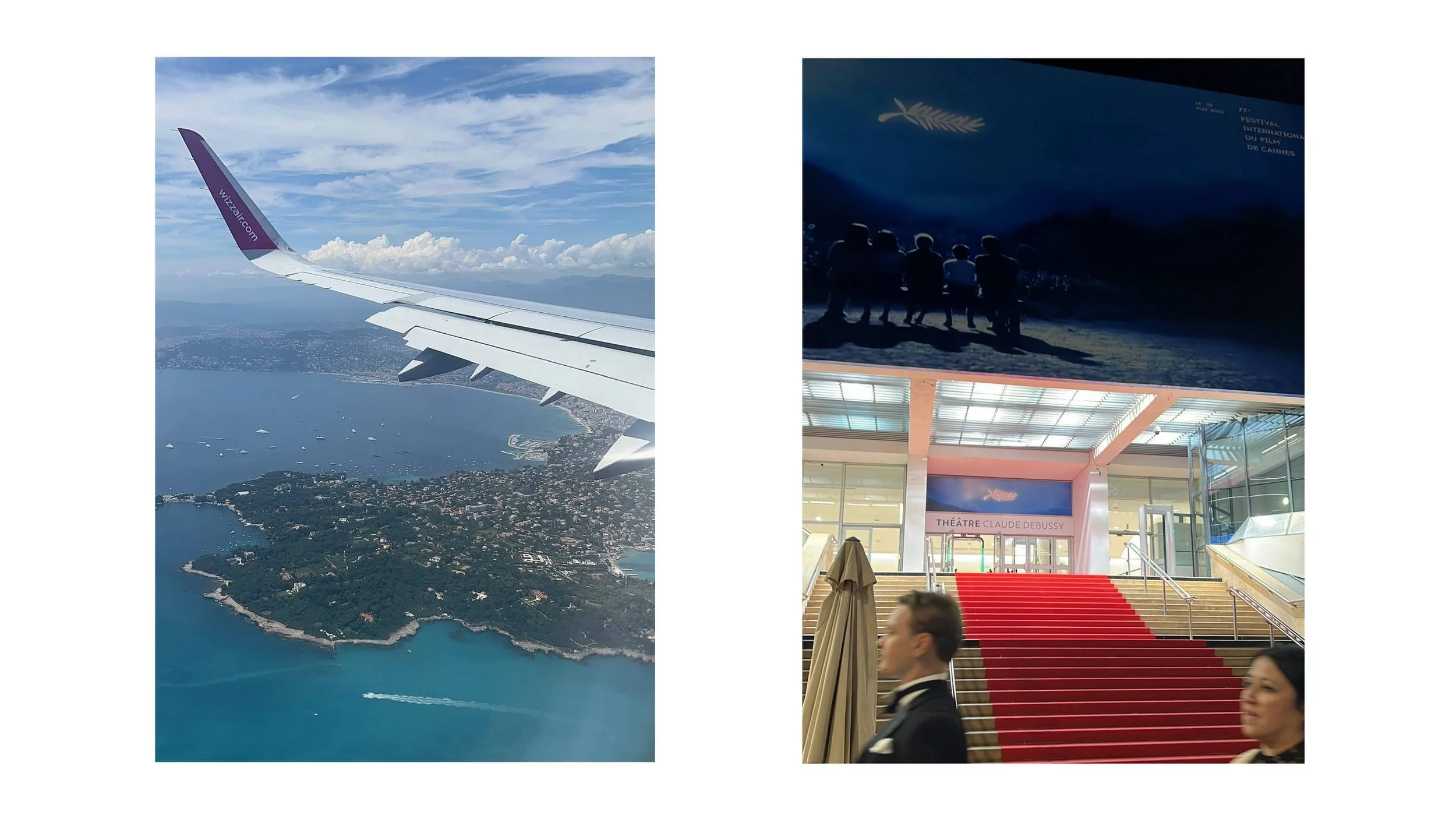
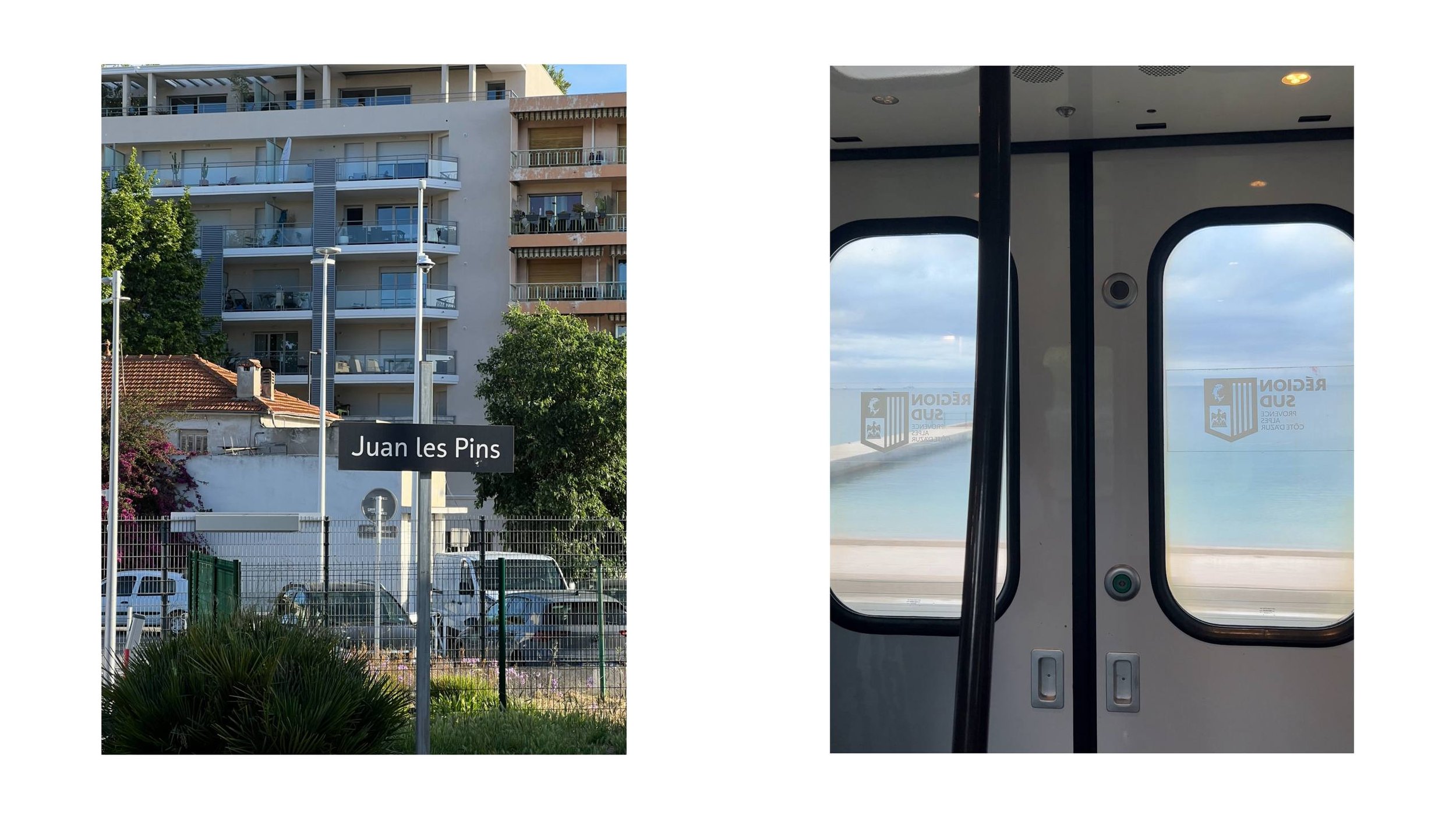
I hope you don’t need me to explain what Booking or Airbnb are. During my first year, I stayed in Antibes — and honestly, it’s a perfect value-for-money option, especially if it’s your first time. It’s about 20 minutes away by train, significantly cheaper than Cannes, and still feels like a proper French Riviera resort.
Another strong option is Golfe-Juan — a small seaside town even closer to Cannes. Availability there is more limited, but it’s well connected by the regional train network (TER), making it very practical.
Some people go for Nice. It’s about an hour away, which is not ideal — but if you’re okay with commuting, you’ll still spend far less on transport than you would on accommodation in Cannes itself.
That said, there’s one important catch: trains don’t run late.
If you stay for evening screenings, you’ll likely miss the last train (around 10 PM), and your only option will be a taxi — which, on the Riviera, is not cheap, especially for longer distances. No matter your accreditation, you’ll usually end up in official group chats with other participants. Use them. During my first trip, we coordinated rides — figuring out who was leaving when, sharing taxis, and splitting costs. That’s also how I met one of my close friends.
If you still want to stay in Cannes itself, a smart compromise is the La Bocca area. It’s about 15 minutes from the city center and the Palais des Festivals, more affordable than central Cannes, and conveniently located on the way to Cineum (which we’ll talk about later).
Whatever you choose, always read reviews carefully and stay alert — scams during the festival period are very real. Try to stay close to the seaside and a train station, and you’ll be fine.
3. What Can I Actually Watch at the Festival — and Where?
Now to the best part of the whole experience — the films.
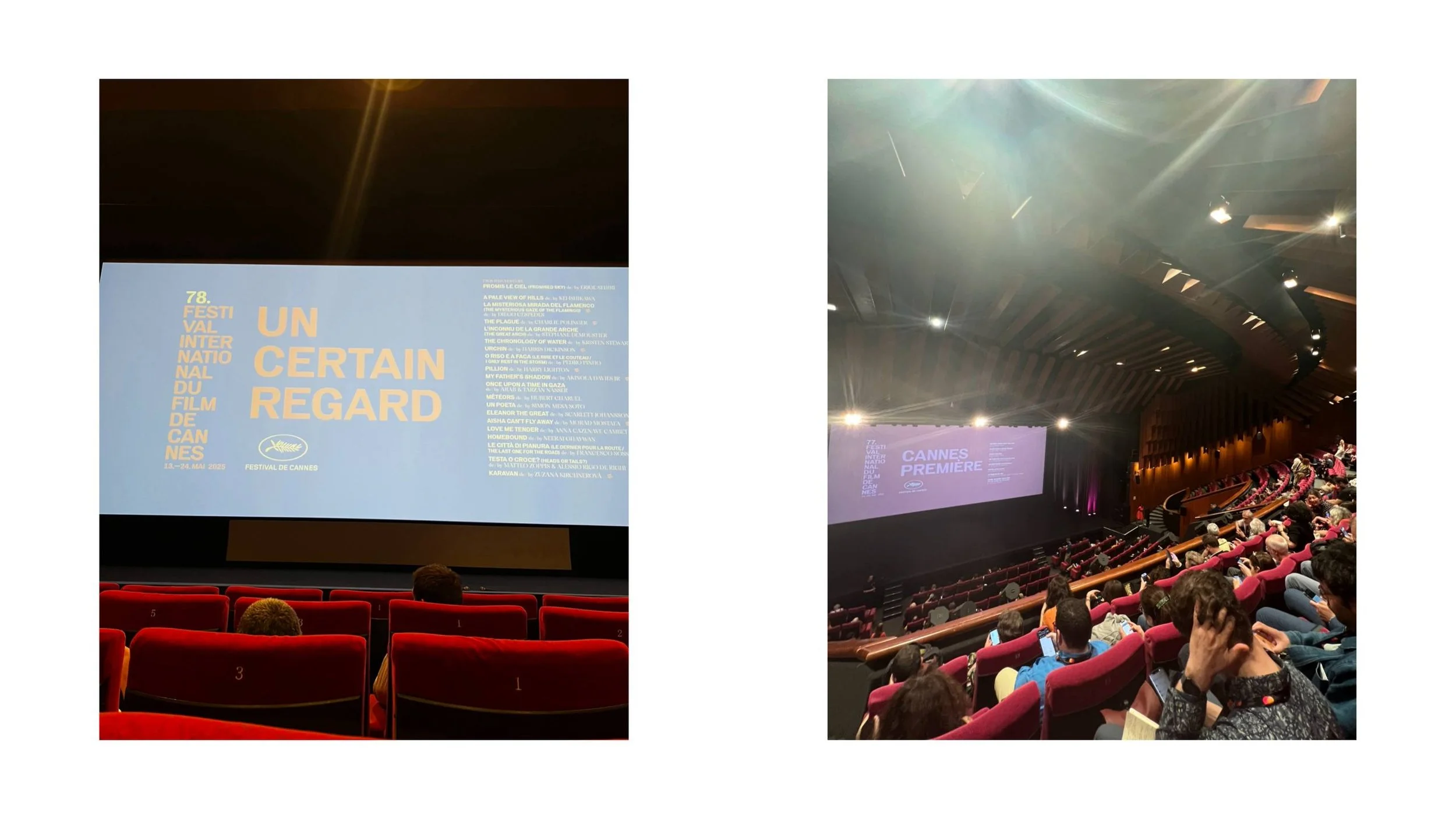
With the 3 Days in Cannes accreditation, you technically get access to all festival cinemas, including the main venues inside the Palais des Festivals. That means rooms like Grand Théâtre Lumière, Debussy, Buñuel, Agnès Varda, and Bazin, as well as cinemas around the city like Olympia and Arcades — and, most importantly, Cineum Cannes. If you’re on the 3 Days in Cannes program, you should be prepared for one thing: you’ll watch most of your films at Cineum. And that’s not a bad thing.
Cineum is a modern cinema complex specifically used for non-professional accreditations like 3 Days in Cannes and Cinéphiles. Most films are screened there the day after their official gala premieres, often with multiple screening options. It’s comfortable, well-equipped, with big screens and great seating — exactly what you want when you’re watching multiple films a day.
My advice: use Cineum, especially in the first half of the day, when most screenings happen there. Just keep in mind — it’s not in the city center. You’ll need to take a bus between Cineum and the Palais, and while your transport pass is included with your accreditation, timing is important. Cannes traffic gets heavy in the afternoon, so always allow at least 40 minutes to move between locations.
Now, about the Palais. Even with a 3 Days in Cannes badge, you can still try your luck for tickets to screenings there — including premieres. During my first year, I made it into the Grand Théâtre Lumière twice: once for an honorary Palme d’Or ceremony for Studio Ghibli, and once for a late-night premiere of Veteran 2. In my second year, I focused more on Un Certain Regard screenings and attended several premieres in the Debussy Theatre, which is considered the second most important venue. I also made it to a French premiere in Buñuel.
These rooms are legendary — each with its own history — and even if the viewing experience isn’t perfect (Lumière and Debussy are huge, and the screens are definitely not huge), it’s still about the vibe. Realistically, you probably won’t manage to visit all venues — there are around ten in total — but it’s worth trying a few different ones just for the experience.
And one more tip. If you have a 3 Days in Cannes badge, you can stay a bit longer after your session ends and try your luck with the last-minute line. You won’t be able to book tickets anymore, but if there are empty seats, they will often let you in.
4. How Do I Get Tickets for Screenings?
This is probably the most important part of the whole experience — and also the one you will end up hating the most. Tickets.
Even though you have accreditation for the Cannes Film Festival, you still need a ticket for every screening. The good news: all tickets are free. The bad news: getting the ones you actually want is far from easy.
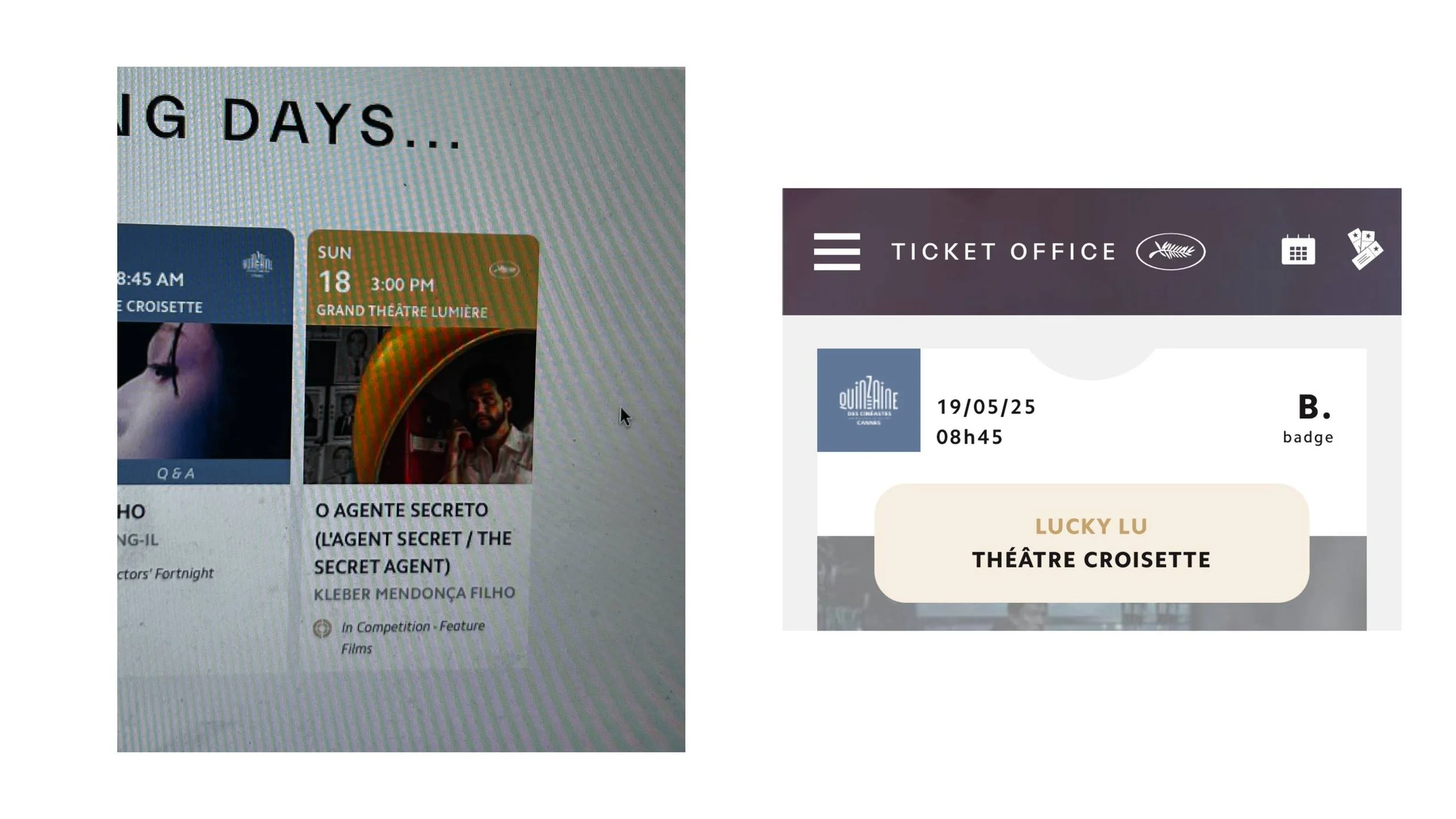
All accredited guests get access to a dedicated ticketing platform in May. Tickets are released four days before each screening day. So, for example, if your session starts on May 20, on May 16 you get tickets for the 20th, on May 17 for the 21st.
All of this happens at 8:00 AM French time for 3 Days in Cannes accreditation. Industry professionals get access one hour earlier. Yes, that means exactly what you think it means: all the biggest gala premieres are basically gone before you even log in. At 8:00 sharp, you can try to grab screenings in Cineum or other venues, but don’t even think you’ll casually pick up gala premieres.
At this stage, your schedule is not a schedule. It’s a rough draft. And even that draft will change constantly. If you see something interesting — take it. Even if it doesn’t perfectly fit your plan. Some of my best festival experiences came from completely random screenings I booked just because something was available. Films I would have never seen otherwise — and often movies that never even get distributed in my country.
After the initial “8 AM battle”, you should keep checking the system regularly. Cancellations constantly appear back in the pool, and you can grab them again. The real chaos starts about 24 hours before each screening day, when people finalize their plans and start dropping tickets. That’s when you can sometimes catch even gala screenings — yes, it happens. So realistically, your phone becomes your constant companion. Whenever you’re not in a cinema, you’re refreshing the ticketing site again and again, trying to catch something new. It gets exhausting. But that’s the system.
One important thing: take your bookings seriously. If you miss two screenings, you can get blocked from booking new tickets for 24 hours. And when you only have three days, losing one is painful. You can cancel a ticket up to one hour before the screening, which returns it to the pool for others. Also, the system doesn’t work at night — the platform is closed.
Another interesting thing: you can sometimes use someone else’s ticket. It happens quite often when people realize last minute they can’t attend a screening. In festival chats, people frequently ask if someone can “scan their ticket” so it doesn’t go to waste. There are also informal ticket swaps — people trade screenings they managed to get. But I strongly recommend doing this only in official Cannes WhatsApp groups, where you know you’re dealing with real accredited attendees.
At the end of the day, it’s almost like a sport — with winners and losers. But here’s the truth: there is always something to watch. And even if it’s not your dream screening, if you have time and a free slot — just go. Because every film in the programme has already been selected for a reason.
Also, there is the last-minute line — a physical queue for available seats. And yes, there are always available seats. People forget about screenings, plans change, life happens — so empty seats do appear even for big screenings. For gala premieres, the last-minute line becomes something else entirely. People can wait anywhere from 3 to 10 hours under the sun just for a chance to get into a screening with directors and actors present. I did it once — in 2025 for The History of Sound. I don’t regret it at all — I met some amazing people in the queue — but I’m not sure I would do it again.
There’s also another unofficial “strategy”: some of the most persistent people stand outside premieres holding signs asking for an invitation. And surprisingly, sometimes it works. Not often — but it does happen.
5. How Do I Prepare My Schedule?
If you love planning and living by a strict schedule — congratulations, these three days will be hell for you. Because the way ticketing and festival life works is simple: your plans will change constantly.
In my first year, I managed to get a ticket literally two hours before the honorary Palme d’Or ceremony for Studio Ghibli. That meant I had to rush out of Cineum right before the premiere of Emilia Pérez. I found a random girl standing in the last-minute line for that screening and quietly asked her if she wanted my ticket. I might have dodged a bullet there.
You always need to be ready for your plans to change — right here, right now. There will be days when you go to sleep with four confirmed screenings for the next day, and end up seeing only one of them — because you’ll find better options during the day and completely reshuffle everything. Or you’ll simply be too exhausted. That happened to me in my first year: on day two, I had four screenings planned and ended up cancelling one just to rest, go to the beach, and actually process the fact that I was in Cannes. Because at some point, it becomes too much — especially the first time.
Screenings start as early as 8 AM and often finish after midnight. It’s exhausting. You’ll be sleep-deprived, running on adrenaline, and constantly moving. The most important thing: don’t hit your limits. Drink water. Eat properly. And don’t be afraid to skip a screening if you need to. It’s better to miss one film than collapse halfway through the day.
Personally, I always had a shortlist of “must-see” films — things I knew I would prioritize no matter what, whether it was a gala or a Cineum screening. But here’s the reality: even if you study the full programme in April, you still might not be able to see everything you planned. Some films simply won’t screen during your session. Depending on the session you attend, certain titles may only premiere earlier or later in the festival. If you’re on the third session, you’ll usually have access to more repeat screenings. So once you know what’s available during your days, pick a few absolute priorities — and everything else should be go with the flow.
Be open to discovering things you didn’t plan at all. And here’s a challenge from me: at least once during your three days, take a completely random ticket — something you know nothing about — and just go in blind.

6. Can I Walk the Red Carpet?
We’re all here for cinema and art… but let’s be honest, everyone also wants that Instagram photo on the most famous red carpet in the world.
And yes, it is possible.
If you somehow manage to get a gala ticket — or someone gives it to you — congratulations. You will walk the red carpet, surrounded by paparazzi. Not necessarily photographed by them (they usually know exactly who they are looking for), but you’ll still feel like a real star. Even when entering through the last-minute line, you’ll still get your moment on the steps — not the full carpet, but still, pretty incredible. Important thing: the security is extremely strict. If you even try to take your phone or camera out during a gala red carpet, someone will immediately appear and stop you. And I mean immediately.
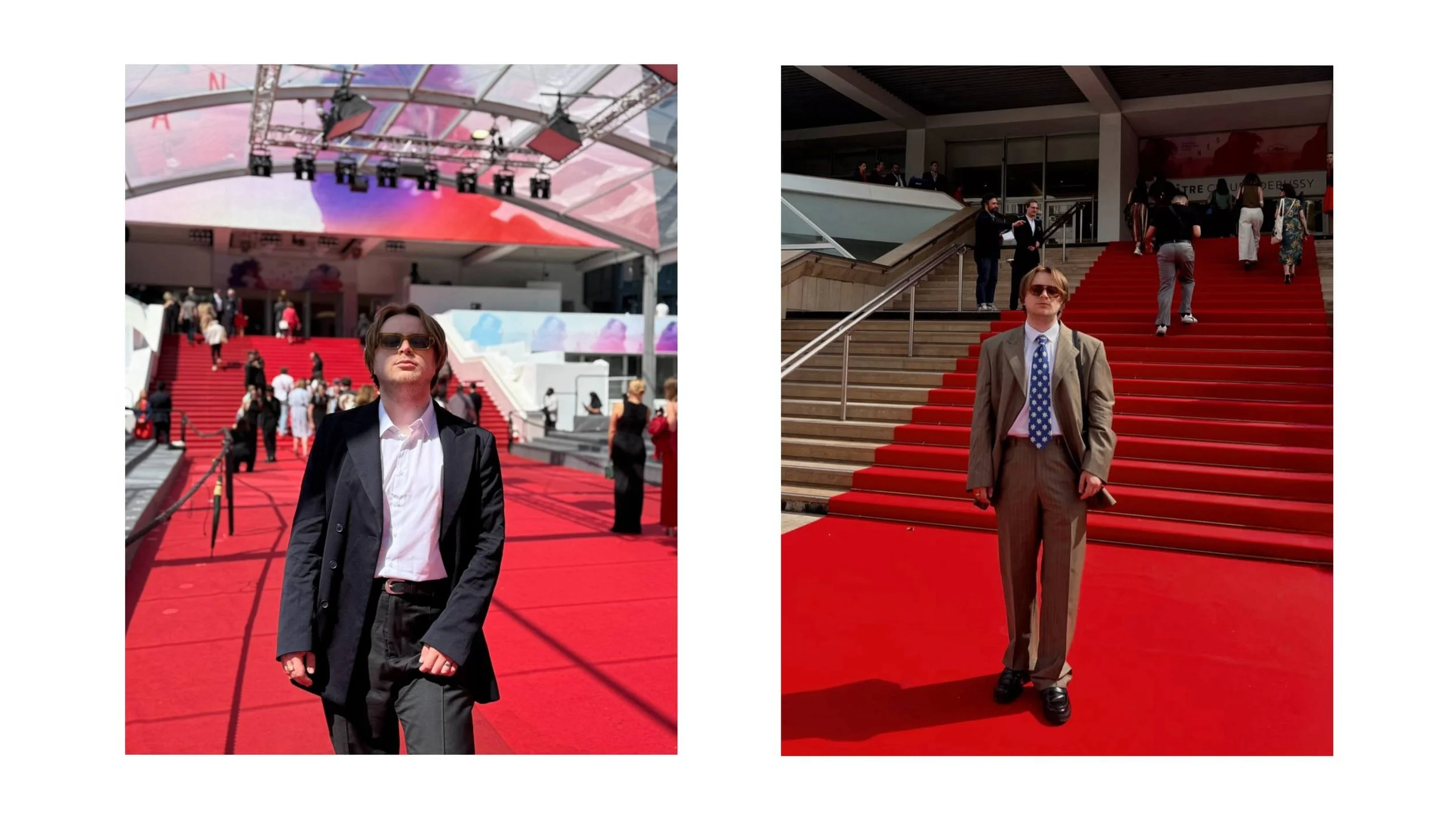
But here’s something much more realistic. Not only gala screenings are shown in the Palais des Festivals. There are also morning reruns, including in cinemas like Grand Théâtre Lumière and Debussy. And yes — Debussy also has its own red carpet, just smaller. These reruns usually happen between 8 AM and around 1 PM. You can actually get tickets to these much more easily. When you attend a morning screening at Grand Théâtre Lumière, you still walk the same iconic red carpet. There are no paparazzi, but there is one huge advantage: security allows photos. So instead of rushing through in 20 seconds during a gala, you can actually take your time. You can even sit on the steps if you want and really take in the moment.
It’s the perfect way to get that “Cannes experience” photo — without the chaos of a premiere. The red carpet is fully closed at all times and only accessible with accreditation.
7. What Should I Wear?
You’re going to one of the most iconic and prestigious film festivals in the world. So yes — dressing up matters.
Let’s start with Cineum. On your ticket you’ll often see the phrase “correct tenue”, which basically means proper attire required. No flip-flops, no beach shorts, nothing overly casual. Even if you’re going to Cineum, you are still part of the Cannes Film Festival. It’s important to show respect — to the people around you, the staff, and the filmmakers presenting their work.
For all screenings outside of Grand Théâtre Lumière, the expected dress code is smart casual to formal. Trousers, proper shoes, shirts, understated outfits. Nothing too loud or beach-style. For many people, these screenings are the presentation of their work — a huge moment in their careers. And for us, it’s also a rare experience that might not happen many times in life. So it’s worth looking presentable.
Now, for gala screenings at Grand Théâtre Lumière — the dress code becomes strict. For men, this means a full suit, black or dark navy, with proper dress shoes and a bow tie is mandatory. Without it, you simply won’t be allowed in. For women, the rules are more flexible: long or cocktail dresses or suits are fine, as well as formal shoes — not necessarily heels (thank you, Kristen Stewart).
Personally, in my second year, I came to Cannes with two suits — one classic black for premieres and one more relaxed daytime option. And I basically lived in suits the whole time. Because, as I mentioned earlier, your schedule changes constantly. You might not plan to attend a gala — and then suddenly, one hour before, you find yourself with a ticket. If you’re not dressed properly and your accommodation is far away, you simply miss it.
So think ahead: dress in a way that is comfortable for you, but still presentable at any moment.
Also — don’t forget sunscreen and sunglasses. Cannes can be extremely hot, especially when you’re standing for hours in a full suit under the sun. Trust me — I’ve waited outside a premiere for six hours in direct sunlight.

8. What Can I Do Besides Watching Films?
First of all — don’t forget where you are. You’re on the French Riviera, one of the most beautiful and luxurious places in the world. We’re not doing a full tourist guide here, but yes — Cannes is stunning, and it’s worth walking around.
But let’s focus on the festival itself and what you can do when you’re not in a screening — or when you suddenly find yourself with free time (which, during the Cannes Film Festival, feels like gold).
First of all, make sure to visit the official festival souvenir shops. You can get gifts for yourself, friends, or family. And don’t forget: with your accreditation badge you usually get around 20% discount — just show your badge at the checkout.
Also, take time to explore the Palais itself. With your access, you can move through different areas where you’ll often find stands with magazines published specifically for Cannes — from outlets like Deadline and The Hollywood Reporter. In the accredited areas, these are often available for free. They’re actually great collectibles — I still have a stack of them from my past visits.
Another must-see are the pavilions on both sides of the Palais. These are stands representing different countries participating in the festival. Each one promotes its national cinema, hosts meetings, and sometimes sells or pitches films. If you’re extroverted, this is a great place to meet interesting people. If not, it’s still worth walking through — the level of effort and design varies a lot, and some of the bigger countries go all out.
Also, you can attend press conferences. Officially, we don’t have access to them, and you can’t book tickets since they are reserved for accredited press only. However, if there are empty seats in the press room, you can sometimes get in through the last-minute line system with your badge. In 2025, I managed to attend the press conference for The History of Sound with Oliver Hermanus and Paul Mescal. It was actually quite interesting.
Finally, if you find yourself with a free evening and still want to watch films, check out the open-air beach screenings. They are accessible to everyone and take place right by the sea.

9. What Is the Atmosphere Like at the Festival?
Unforgettable, chaotic, brilliant, and at times exhausting.
To be completely honest — the first time, I was overwhelmed. As someone who was born in a small town in Belarus, I could never have imagined finding myself in this kind of environment — at one of the most prestigious events in the world, surrounded by incredible directors, actors, and people who love cinema just as much as I do, and actually work in this industry.
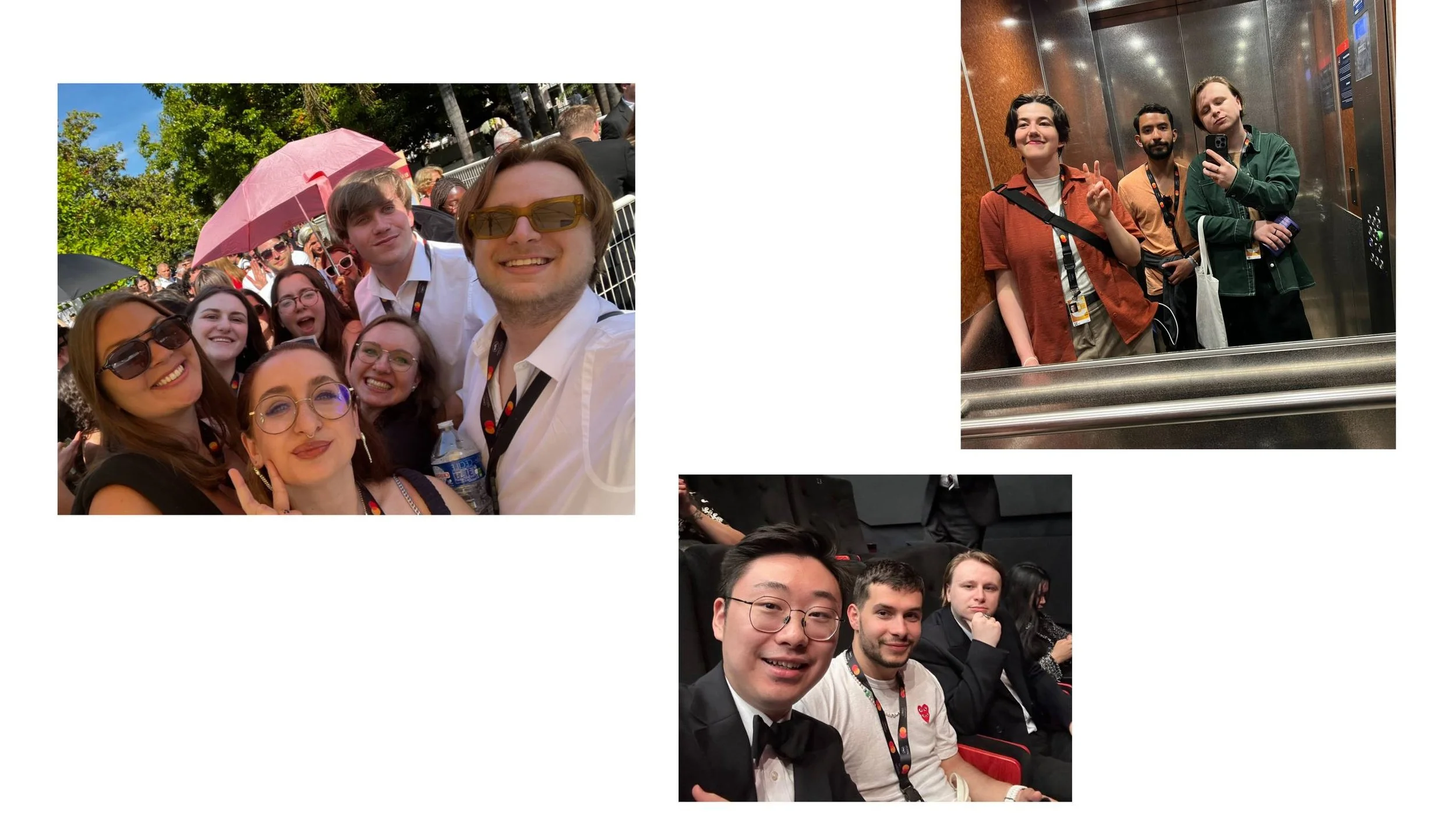
My experience with people in the 3 Days in Cannes program has been overwhelmingly positive. Even though I’m naturally an introvert, I always try to stay open to meeting new people at events like this. I’ve met a huge number of genuinely interesting people, many of whom I’m still in touch with today, and that alone makes the experience worth it.
Most people at the festival are friendly. They’re often willing to help, explain things, or simply talk about films while standing in line — because at the end of the day, we are all there for the same reason: cinema.
Be kind. Offer help if you can. Ask for help if you need it. Don’t be afraid to approach people or take a wrong turn, because you never know what unexpected and unforgettable moments might be waiting just around the corner.
10. Is It Worth It?
Hell yes.
See you during the Cannes Film Festival 2026 ✨
