La bola negra (The Black Ball)

An epic tragedy about life.
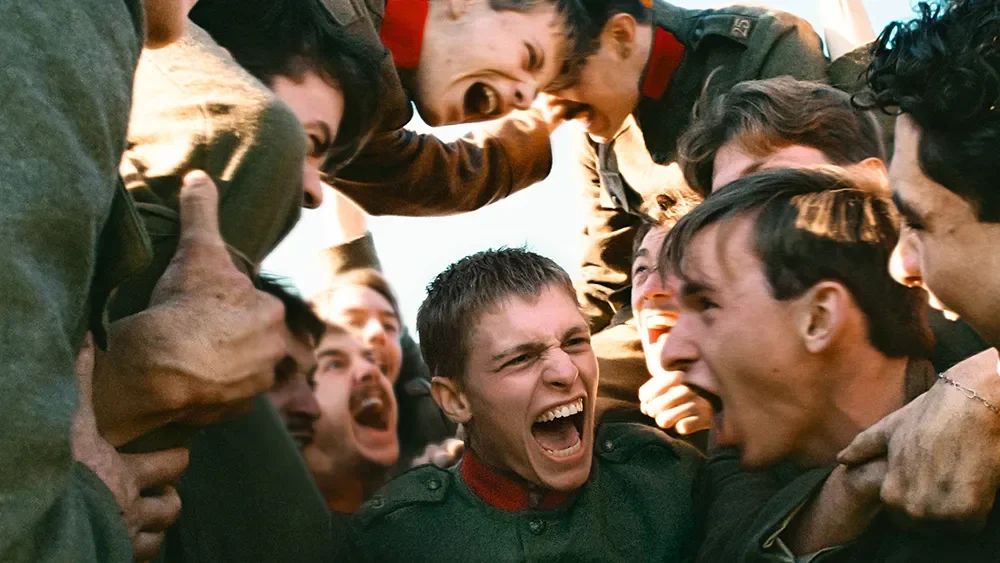
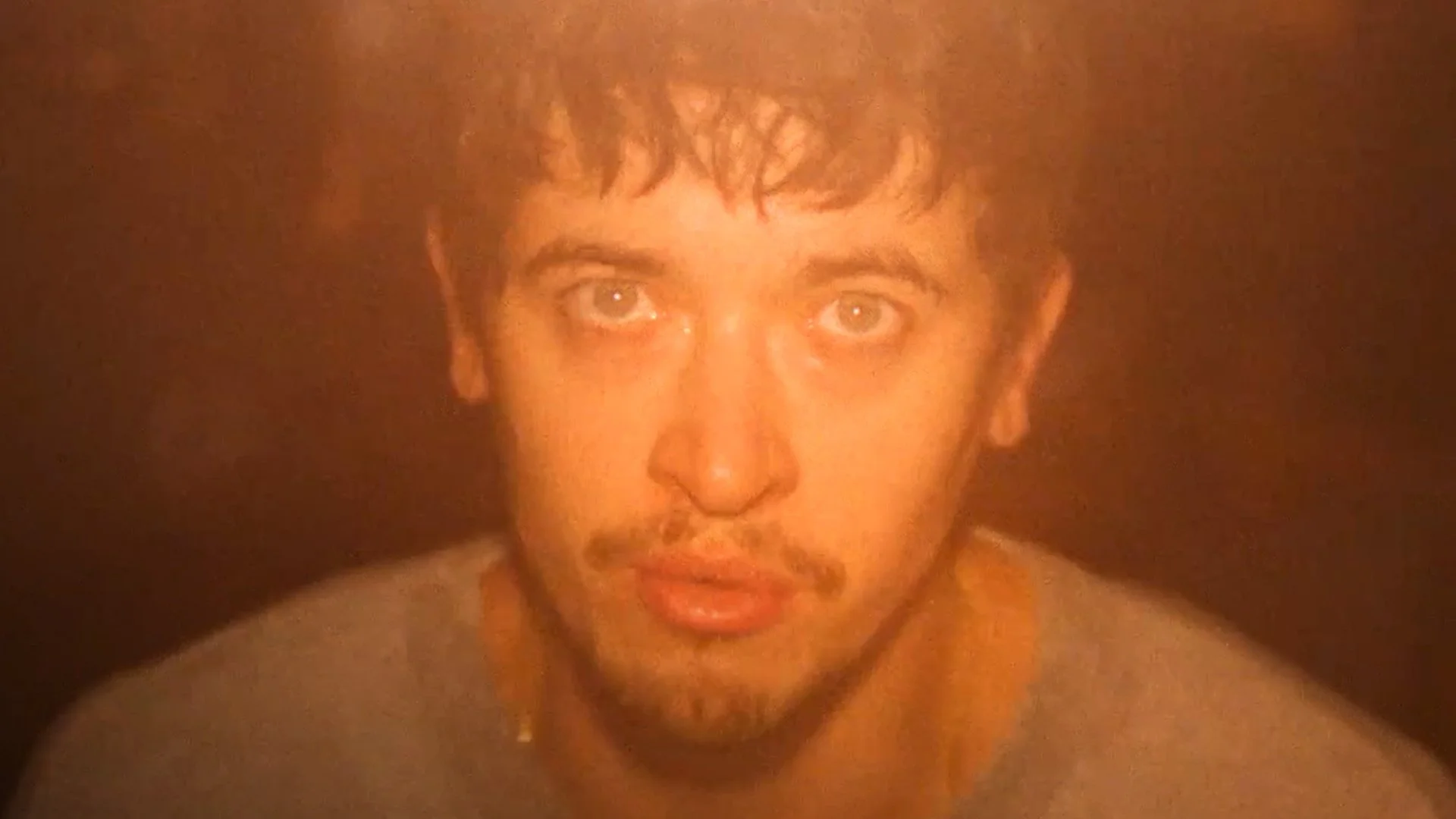
La Bola Negra tells three different stories about three different gay men. In 1932, we explore the story of Carlos and his attempt to become a full-fledged member of society. In 1937, we follow Sebastián and Rafael, who meet during the Spanish Civil War as enemies. Rafael is also directly connected to the man who created Carlos’s story. And then there is 2017, where we meet Alberto, who is trying to find his place in the world and figure out his complicated family relationships. Of course, at some point, all these stories intertwine and become important pieces of each other’s stories.
It is pretty rare for films to leave you so insistently alone with your own thoughts and make you take some time to process what you’ve just seen. It took me four kilometers of walking through the night city after leaving the cinema to process what I had just seen on the screen.
I saw something truly monumental, big and incredibly important — probably one of the most important queer stories of this decade.
Los Javis have genuinely created an epic on screen, with a massive, interesting, dense, multifaceted, sometimes angular, sharp, not always perfect, but incredibly rich and astonishing story about the lives of so many people, because we obviously don't stop at the three main characters. Despite the film being divided into three different periods, we get three incredibly developed and deep stories that, throughout the film, sometimes predictably and sometimes completely unexpectedly, unfold into one long story spanning almost a hundred years.
It is a story that very delicately intertwines the history and tragedies of the Spanish Civil War, the history of a puritanical society that refuses to accept gay people, and the stories of lost people who chose the path of least resistance and did terrible things that they would later regret for the rest of their lives. It is also about how the past directly helps the future. Not only in the way the historical characters of this film might have thought, but by helping a character in the present discover his own history and, in a way, let new people into his life and even build a bridge in relationships with people with whom the bridges seemed to have been burned a long time ago.
It is about the importance of remembering those who came before us, their stories, and what they leave behind. Because, as we know, history is written by the winners (or survivors), and neither of them are always the good guys.
Despite its length — the film runs for 160 minutes — La Bola Negra completely grabs you. And the longer you watch it, the more it literally sucks you into its story, slowly but surely breaking your heart for almost three hours, only to rip it out at the very end.
The cinematography by Gris Jordana is absolutely stunning, filled with incredibly rich, grandiose shots that still manage to feel very intimate. The score by Raül Refree gets under your skin and simply guides you through the entire story in an incredible way. The direction by Los Javis is absolutely phenomenal, indescribably good. This is one of the best-directed films I have seen in the last few years.
And, of course, none of this triumph would have happened without an incredible cast. Guitarricadelafuente, making his film debut as Sebastián, delivers a performance that so deeply and delicately captures the torment and inner pain of a man who knows he chose the wrong side and made the wrong decisions, but simply couldn't resist them. Carlos González as Alberto gives a much less showy performance than everyone else, partly because he is playing a character in the present, but he still manages to tell such a deep and piercing story on screen. Miguel Bernardeau as Rafael is simultaneously strong and incredibly sensitive, such a poignant character. Milo Quifes as Carlos becomes the embodiment of one of the characters’ imagination, revealing this story in an incredibly poetic and symbolic way. And there is so much symbolism throughout this film.
Then there are the wonderful cameos from Penélope Cruz and Glenn Close. While neither of them became show-stoppers for me personally in this film, they both looked absolutely fantastic. And overall, there are hundreds of people in the background and the crowd who fit this world so perfectly and complement it so beautifully that, honestly, there is simply nothing else to add.
Basically, La Bola Negra is about the importance of protecting queer art, while also being queer art itself that demands protection. And for that one, I would march through the streets. Will you join?
9.5/10