Pressure

The subject of World War II seems inexhaustible, and sometimes it feels like a film has already been made about every possible angle of it. Even the story we’re talking about today, connected to the Normandy landings, has already been told plenty of times, including in the Oscar-winning Saving Private Ryan. So what can you possibly add to this story? Director Anthony Maras goes behind the scenes.
Pressure tells the story of meteorologist James Stagg, who is called to the headquarters preparing for D-Day because he is considered one of the best experts when it comes to predicting the weather. And considering that just a few weeks earlier, the practice landing known as Exercise Tiger was a complete disaster that led to the deaths of many people, a pretty serious responsibility falls on his shoulders. As their research and preparations continue, the task seems extremely difficult and, in places, almost impossible. But relying on his experience, and sometimes simply on his gut feeling, James Stagg goes against the opinion of the chief American meteorologist, Irving P. Krick, and claims that the planned date for D-Day is impossible because the weather will be terrible and a storm is coming. The internal battles and dramas of war all get mixed together and ultimately fall on the shoulders of General Eisenhower, who has to decide who he trusts: the American meteorologist, who is giving the generals the information they want to hear, or the opinion of the eccentric but confident British expert.
There aren’t really any major spoilers to expect here. I think everyone knows that D-Day was indeed postponed at the last minute and that the landing ultimately succeeded, becoming an important part of the liberation of Europe from Nazi Germany. Naturally, the film includes some exaggerations for the sake of extra drama, and parts of the story have been slightly adjusted, but overall, this is pretty much how it happened.
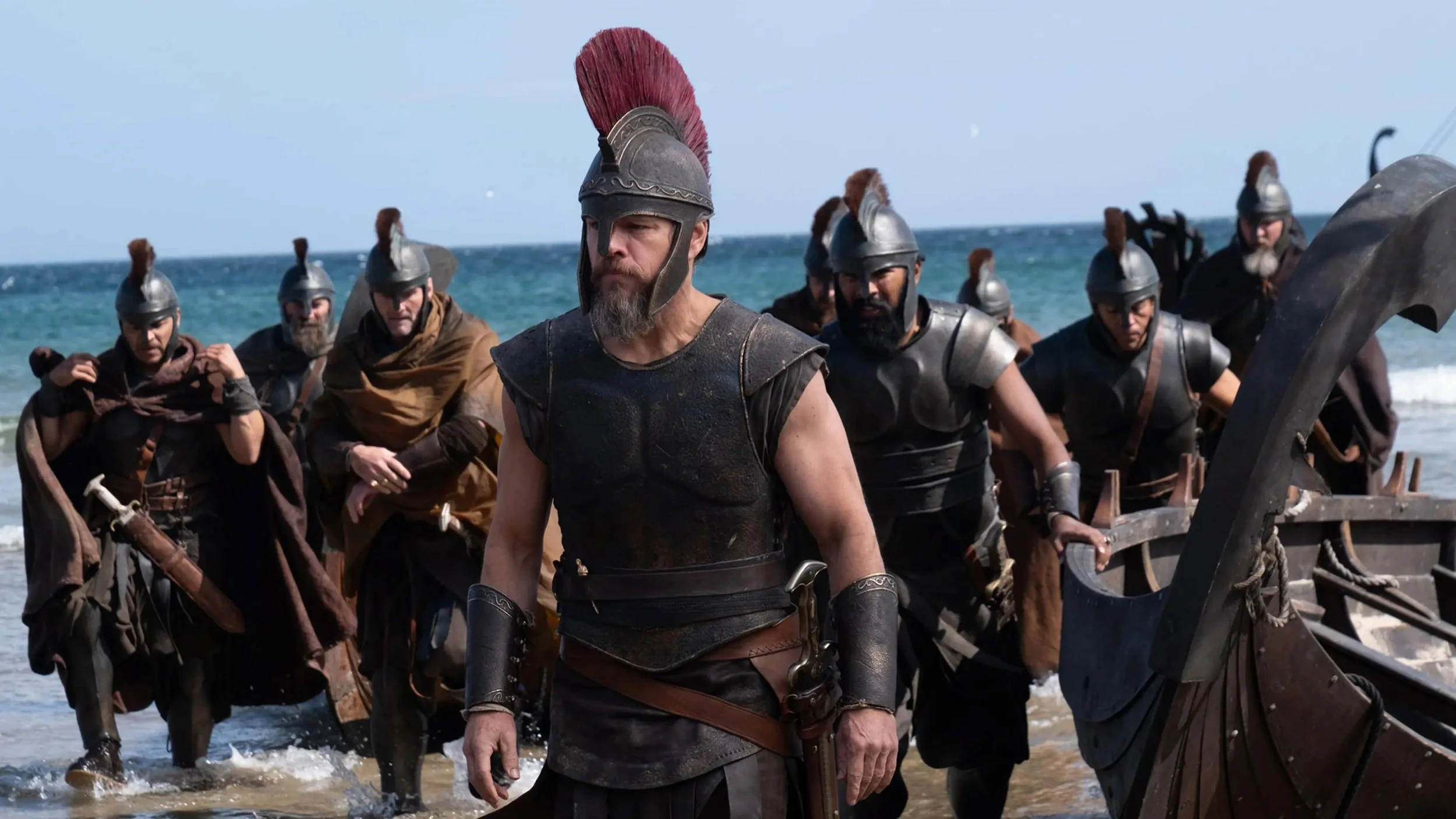
And despite the fact that the film contains several fairly large sequences, including the Normandy landing itself as well as the training landing, most of Pressure takes place within the base, in a fairly closed atmosphere between offices and the emotional turmoil of its main characters. Despite being a fairly standardized war drama, it feels surprisingly heartfelt and genuinely interesting to watch, while its short-for-modern-day-standards 100-minute runtime feels just about right.
A big part of that is probably the casting of Andrew Scott as James Stagg. Because, first of all, Andrew Scott in any kind of uniform is already a win. He is genuinely the main character of this film, and it’s interesting to watch him, his mannerisms and all these little details that make his performance feel so believable. The rest of the cast, including Kerry Condon and Chris Messina, also bring fairly memorable characters that are interesting to watch, especially as we see all these very different personalities collide.
I like that Pressure isn’t focused on the battle itself, but rather on the internal processes, on these important cogs and smart people without whom there would never have been a victory. Showing people like this, people you might not always think about when studying history, and whose names aren’t necessarily the ones you see highlighted in history books or learn about at school, feels important. Their contribution and their stories matter because an enormous responsibility for the lives of tens of thousands of people was resting on their shoulders.
And getting a glimpse at how all of this could have happened behind the scenes turned out to be much more interesting than I expected. And I’m saying this as someone who is not a fan of war dramas at all. Maybe that’s exactly why Pressure felt like one of the most interesting war films of the last few years to me. It genuinely has some soul and intelligence, as well as beautiful cinematography, to justify watching it and going to the cinema for it.
7/10