Sentimental Value
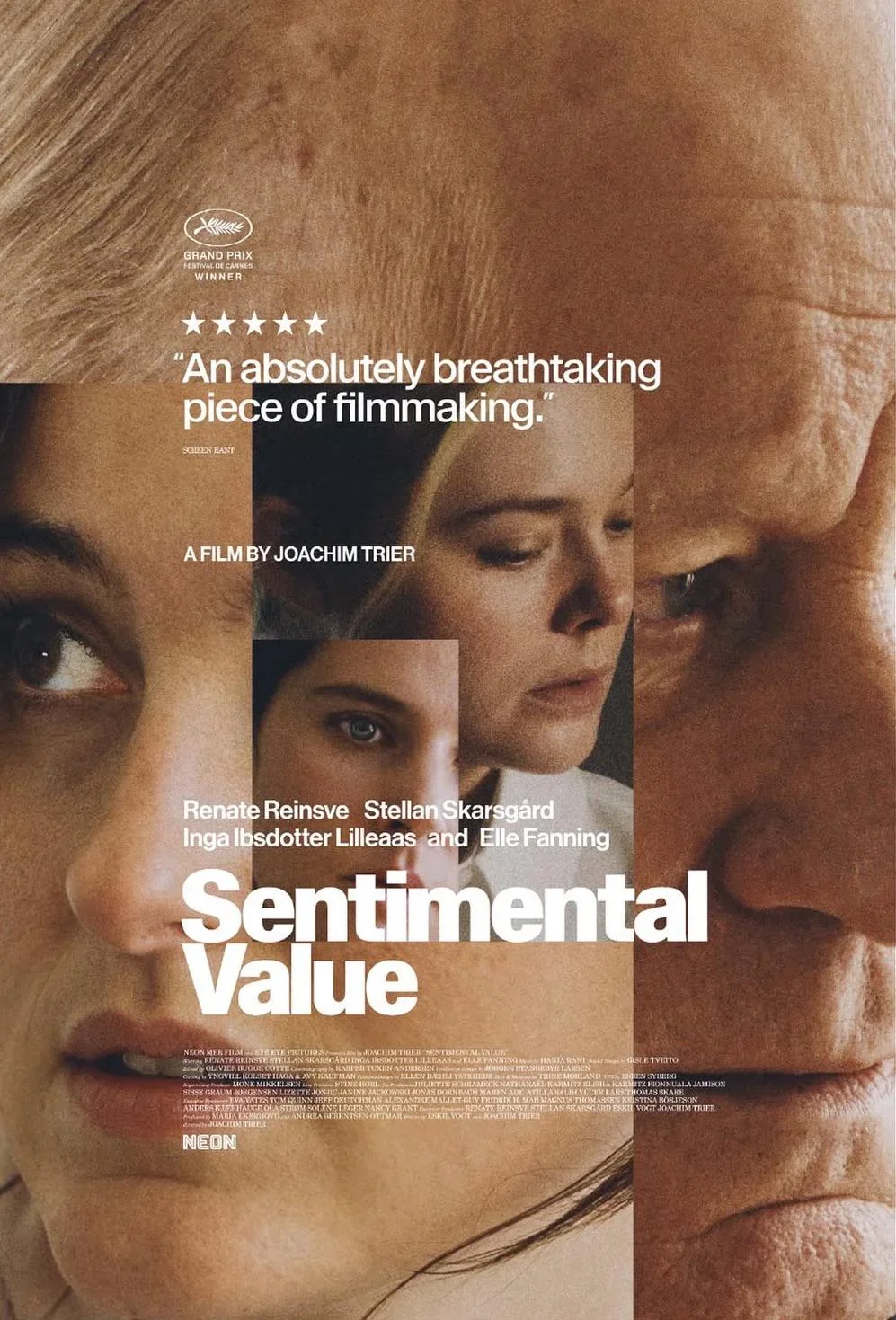
By the end of the year, there’s always a pull toward something sentimental, and what could be a better way to close out 2025 than with a review of Sentimental Value, the new film by the brilliant Joachim Trier.
The film tells the story of the Borg family. Gustav Borg is a film director who left his family when his children were still very young — an eccentric, career-obsessed filmmaker who cared far more about his art than about the people closest to him. After the death of his ex-wife, he returns to Norway to reclaim the family home and attempts to rebuild a completely broken relationship with his two daughters, Nora and Agnes. Agnes is in a happy marriage, has a son, and works as a historian. Nora, on the other hand, became a theatre actress, but in life she turns out to be a deeply wounded and rather problematic person. Gustav’s attempts to reunite with his family open up enormous scars and unresolved issues he left behind, especially in Nora, whose resistance toward her father reflects how deeply she was hurt by his abandonment. Adding fuel to the fire, Gustav arrives with a finished screenplay in hand and even tries to convince Nora to play the lead role in his new film.
Later, it becomes clear that this film is inspired by the story of Gustav’s own mother. On an emotional level, however, it expresses something Gustav himself is unable to say out loud — his regret. Because of his pride and selfishness, he cannot openly admit how much he regrets in his life, but through art he tries to show his children that he feels remorse, that he is capable of empathy, and that he understands far more than he ever managed to express as a father.
In simple terms, Sentimental Value could probably be described as a study of daddy issues. But its emotional depth is so piercing and textured that this very simple, very ascetic, very Scandinavian story manages to touch on a wide range of themes that feel important to almost everyone. Regardless of whether the characters feel directly relatable to you, once you start unpacking them, you’ll find something that resonates on a personal level.
This is a film about parents and children, about depression portrayed honestly and without embellishment, about how people influence each other, and about how — even when it feels like everything has been lost — it is still possible to try to become a little bit better. It’s about reaching out a hand to someone who needs it, even if that person pretends they don’t.
Sentimental Value is not a grand film, nor is it something that radically opens new doors. But its insight, honesty, and narrative straightforwardness force you to do more than just observe what’s happening on screen. You empathize with the characters, and more than that — you start transferring their experiences and choices into your own life. This film makes you think, and that alone is already a victory.
The cast plays a huge role in why this film works as well. Stellan Skarsgård delivers a restrained yet deeply perceptive performance as Gustav — an eccentric father who abandoned his children and is far too proud to admit that he may have made a terrible mistake. Renate Reinsve is absolutely outstanding as Nora, portraying an adult woman who still carries a wounded child inside her. Elle Fanning, as Rachel Kemp, fits perfectly into the story as a kind of outsider figure, adding another layer to the narrative.
Overall, everything on screen feels honest and appropriate to the film’s themes. Hollywood often has a tendency to be overly extravagant, even when it’s unnecessary. The fact that Sentimental Value is a Scandinavian film gives it exactly the restraint and tone it needs — and that is precisely why it’s likely to resonate with almost everyone who watches it.
8/10