Evgueni Galperine on Creating the Emotional World of Half Man and Baby Reindeer
What makes a great score truly unforgettable? We spoke with composer Evgueni Galperine, the acclaimed musician behind the score for one of 2026’s most talked-about series — Richard Gadd’s Half Man, a project we have been passionately recommending since its release — as well as Gadd’s previous hit series Baby Reindeer.
Galperine’s music can also be heard in projects including The Hunger Games, Loveless, Split, Kraven the Hunter, Scenes from a Marriage, Corpus Christi, and The Wizard of Lies. His latest work includes the upcoming Minotaur by Andrey Zvyagintsev.
In our conversation, Galperine talked about working with Richard Gadd, creating music for emotionally intense stories, collaborating with his brother Sacha, and the recent films and series whose scores left the biggest impression on him.
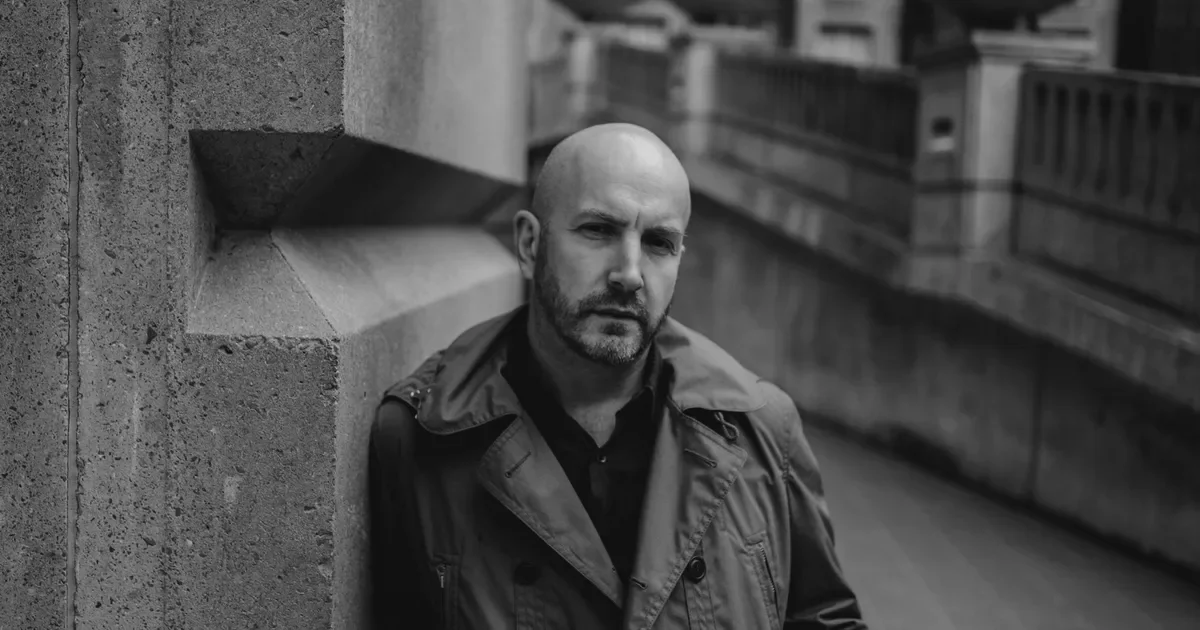
Credit: Alina Sepp
PS: Hello Evgueni, thank you so much for taking the time to speak with us today. First of all, huge congratulations on the success of Half Man — the series has been everywhere and people are still talking about it. I was keeping my fingers crossed while watching the Emmy nominations announcement, but the show received only one nomination. Of course, that’s still a great achievement, but it also felt like it deserved more.
EG: After the huge success of Baby Reindeer at the Emmys, I was also expecting Half Man to receive more nominations. But perhaps the series was a little too complex or challenging for many of the voters.
PS: You worked with Richard Gadd on Baby Reindeer several years ago, and now you’ve reunited for Half Man. At this point, it’s fair to call it a creative partnership. How did this collaboration originally begin?
EG: It started when my brother and I were offered a small, low-budget series called Baby Reindeer. We were already very busy at the time, but they sent us a couple of episodes and the script. We watched it and immediately understood that we couldn’t turn it down — even if it meant working on it at night, we would do it. There were only about two and a half months left for us to create all the music. They contacted us quite late because they had spent about a year trying to work with another composer, but it didn’t work out. Our music had already been used as a temp track during the editing process, so the producers from Clerkenwell Films — the company behind Baby Reindeer — reached out to us. We agreed very quickly because we realized it could be a very niche project. But it had such incredible quality, originality, and talent behind it that we couldn’t say no.
At that stage we were mostly working with the producers and directors. Richard probably wasn’t as well-known yet and maybe didn’t have the same level of influence that he does now. Then we went to London for the premiere and finally met him. The premiere was held in a dance studio, in one of the rooms there, and the screening was delayed for an hour because the producers were literally trying to unlock the screen with screwdrivers. But my brother Sasha and I really believed in the project and completely fell in love with it. Richard loved the music, and to our great pleasure, he invited us to work on his next project — which he had already signed on before Baby Reindeer was released.
Then Baby Reindeer came out, and Richard became a star almost overnight. But he still managed to finish Half Man, and about six months later we started working with him on the score.
PS: So there was never a feeling that Baby Reindeer would become such a huge phenomenon?
EG: Not at all. We always felt that it was an incredibly talented and outstanding series, but we also thought that probably not that many people would watch it because it was psychologically very intense. It was also very different from the kind of standard content that streaming platforms usually offer.
I have to say, there are very few projects that are comparable to it. Maybe Adolescence was one of them later — another very high-quality, talented, and unconventional series. But it’s rare. Something like this happens maybe two or three times a year at most.
PS: And usually it comes from British productions.
EG: Especially from British productions. Baby Reindeer was a real phenomenon. The fact that the actor was playing a role he had written himself and using his own personal story made it especially unique.
For us, it was fascinating because we were creating the music, and Richard wasn’t only commenting on whether the score worked for the series itself — he was also responding based on what he felt during the moments when those events actually happened to him. So there was this double filter.
PS: When you were working on Half Man, was there a greater level of involvement from Richard Gadd and his production team?
EG: Richard’s involvement during Half Man was absolute. We were communicating almost exclusively with him. He had become a star, and naturally, he was now in a much more central position — he was the showrunner, the lead actor, and also a co-producer, so almost every decision went through him. Of course, there was also director Alexandra Brodski, who directed three episodes and worked together with Richard on the whole process of pre-production, but very quickly the communication became primarily with Richard.
He is incredibly driven and a true perfectionist. He is able to spend weeks on the smallest details, so our role was to focus on those details while also reminding him about deadlines and the need to finish the work. I honestly think that if we hadn’t been reminding him about the schedule, we might still be working on finishing the score for Half Man today.
PS: I also wanted to talk a little bit about the duality between these two projects. Obviously, they have the same creator, and many members of the team moved from one project to the other — including yourself — but Baby Reindeer and Half Man feel very different. To me, Baby Reindeer has elements of a psychological thriller — it feels somewhat claustrophobic and, at times, almost detective-like. Half Man, on the other hand, feels much more raw and brutal, emotionally open, and louder in its expression. How did your approach change between these two projects?
EG: I think they are both emotionally open, because Richard’s style is based on absolute honesty and sincerity. It’s almost like completely stripping yourself down — putting all of your emotions, fears, and vulnerabilities on screen. That’s one of his greatest strengths because, beyond being incredibly talented, he also has this brutal level of honesty.
But you’re right that Baby Reindeer had a slightly different structure. It had more of a mystery element — it was built around the feeling that we didn’t know how the story would end. Half Man is more psychological, more brutal, and more intense. But in both projects, we approached the music in a similar way: we didn’t want the score to simply make the darkness darker. Instead, we wanted it to bring a sense of universality — to make the audience feel that, in some way, this could also be their story.
Through the music, we wanted to slightly soften this constant, overwhelming tension. Not everywhere, of course, but in many places. We wanted to bring in more universal colours, a sense of fate, of something inevitable. The music was not there to represent individual scenes as much as it was there to represent the story as a whole.
PS: Was it personally more challenging for you to work on Half Man because of the context of the project? The series does something quite rare for contemporary television — it speaks directly to men about deeply personal issues: masculinity, identity, and self-acceptance.
EG: I don’t know if it’s specifically because the series addresses men, but its direct, powerful, and very destructive energy definitely had an impact on us. We lived with this series for six months, and it is so intense and emotionally charged that it was not easy. That’s why we tried to find as many nuances as possible even within that violence and harshness — elements that could add new colours and create contrast with the overwhelming intensity. We wanted to bring in some poetry, some lyricism, and even a little bit of a fairy-tale quality. The project has this feeling of a jackhammer constantly hitting you. And our response was to try to add more layers and subtlety.
Actually, that’s something we try to do in all of our projects: find a role for the music where it doesn’t simply illustrate what is already on screen, but brings something of its own. For example, we approached it this way with Minotaur by Andrey Zvyagintsev [Cannes Film Festival 2026 Grand Prix winner], where the music had an especially radical role — it was bringing something completely unique and independent to the film.
PS: I didn’t get a chance to see Minotaur in Cannes, so no spoilers. But considering its themes and how timely it is, if you had to describe the film’s musical world, what would it sound like?
EG:Minotaur is a film about moral choice. The protagonist finds himself torn between his family and his work, which is deeply connected to business and politics. At some point, he is forced to cross the boundaries of what we consider moral behaviour in order to either preserve his relationships or preserve himself. That’s why the film is called Minotaur. The labyrinth from Greek mythology becomes a metaphor for wandering through the corridors of your own soul and your own mind, searching for who you really are.
The music tells the story of everything the protagonist is trying not to notice — everything he is trying to accept as the new normal. The score constantly reminds you that something is wrong, that something is happening which should never be happening. It’s almost as if the image becomes slightly doubled, slightly out of focus. And the music is like the breathing of the Minotaur, standing somewhere very close. One more wrong step, and you could disappear forever.
PS: From the way you describe it, it actually reminds me a little of The Zone of Interest.
EG: Absolutely. They are very different films, of course, but they explore a similar idea. The perspective and the context are completely different, but I think the parallels are there.
PS: Going back to Half Man, if you had to choose one piece of music — not one of your own — that, for you, represents the series, what would it be?
EG:Messa di Santa Cecilia: IIIb. Et incanatus est by Alessandro Scarlatti.
I think Half Man has an incredible sense of humanity. There’s beauty, pain, and an immense emotional tension — almost like a nuclear reaction taking place inside a person. To me, that’s also a wonderful metaphor for what happens inside every artist. As a composer, a filmmaker, or any kind of creator, you need a tremendous amount of sensitivity. And with that sensitivity comes this overwhelming knot of emotions and feelings. You have this sense that if you don’t bring them out into the world — if you don’t transform them into something real — they will eventually explode inside you.
I only recently discovered Scarlatti’s Messa di Santa Cecilia, and this particular movement is astonishingly beautiful. At first, it may seem very far removed from Half Man. But it possesses the same piercing emotional quality that I find in the series — something I miss in so much of today's cinema, where everything has become so standardized.
PS: You often work with your brother Sacha, including on Baby Reindeer and Half Man. Be honest — is it easier or more difficult to work with a family member?
EG: Honestly, if it were more difficult, we probably wouldn’t have been working together for so many years. We have a wonderful relationship. We grew up together, we moved around a lot, and many times we were alone, without friends around us. Because of that, we developed a very close bond and a very similar taste.
The profession of a composer is actually quite lonely, unlike being an actor or even a cinematographer or director. So having the opportunity to share this journey with someone close to you — someone you respect both as a person and as an artist — is a great joy. You can share the successes and the failures, you can ask for advice, and you can create something together.
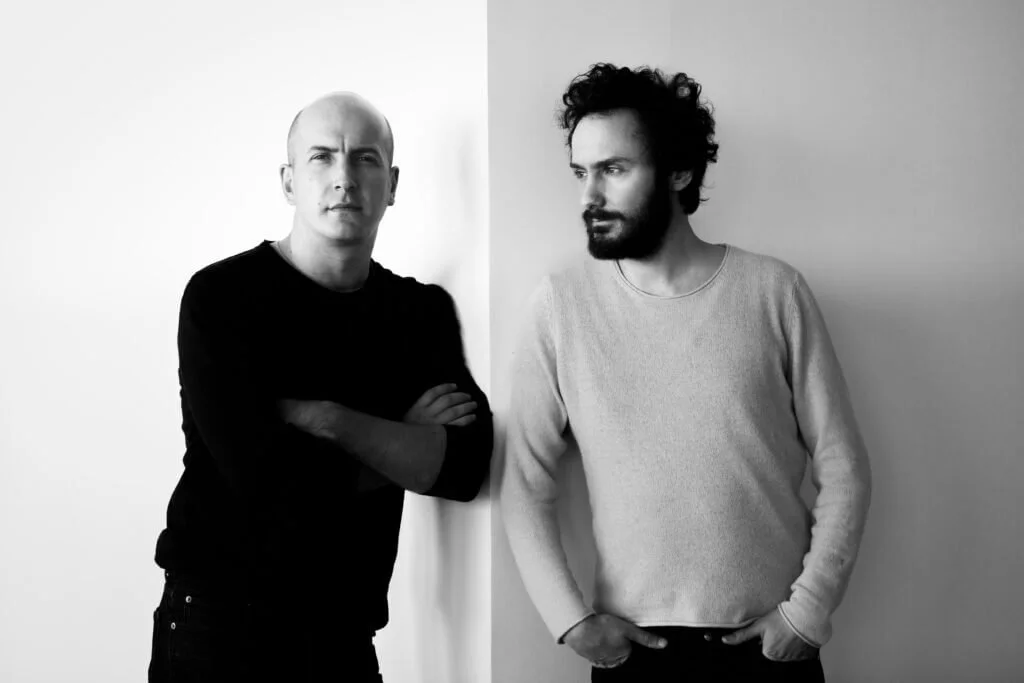
Credit: Cool Music Agency
PS: There’s something very poetic about the fact that two brothers worked on the score for Half Man.
EG: Absolutely. We even made our own imitation of the series poster.
PS: And if creative disagreements do happen, how do you resolve them?
EG: A fight. (laughs)
PS: Very Half Man-like. The important thing is that it doesn’t end the way it does in the series.
EG: My brother and I have a rule: if we disagree about something — which is rare, but it does happen — we create two different versions, each based on our own vision, and then we show both to the director. The director becomes like King Solomon, the person who can make the final decision and say what works and what doesn’t. Luckily, we don’t have any sense of jealousy toward each other. So if they choose one person’s version over the other’s, we’re genuinely happy for each other.
And I can share a little secret: if a great piece of music doesn’t find its place in one project, it will probably find its place somewhere else. Maybe a year later, maybe five years later, but eventually there will be a project where that music belongs.
But it's definitely a great advantage to work together. And if I ever feel like doing something on my own, I just work solo on projects like my album Theory of Becoming, which I made with ECM Records.
PS: Speaking of that, are there any plans for a second solo project?
EG: The first album was a very important milestone for me. It was a big personal achievement, and it was received very positively by the press. The music has also found its way into many different forms — including contemporary ballet, film, television, and theatre. And honestly, even if it hadn’t been successful, I would still have wanted to make a second album.
The next one is also being created with ECM Records, which is a wonderful German label. Unfortunately, I don’t have as much free time as I would like, but I try to dedicate a few months every year exclusively to this project and not take on any films during that period. I really hope to finish it by next spring.
This time, the album will not only include pieces that combine electronics and acoustic elements — there will also be works that are entirely acoustic. Among them will be pieces for a children’s choir. At the end of the year, I’m going to Kyiv to record with the Shchedryk Children’s Choir, which my mother actually conducted back in the 1980s.
PS: When you work on a film or a series, you have the images and the script to guide you. But when you create your own music, do you imagine some kind of visual world or representation in your mind?
EG: At first, it’s that knot of emotions I was talking about — that initial Big Bang. Then, once you start working and understand where the music is taking you — which is sometimes impossible to predict — the image slowly begins to appear during the process itself. It’s actually rare that I have a clear idea from the beginning of exactly where I’m going. Usually, it’s a very vague feeling that changes several times throughout the creative process. I feel like I’m moving somewhere alongside the music, and we are guiding each other. I never have the feeling that I’m completely in control of the process. Very often, certain sounds, melodic ideas, timbres, or harmonies take me by the hand and lead me into their own world. A more defined sense of direction usually appears somewhere in the middle of the process.
But because this is all abstract, and because the idea is for every listener to create their own images and interpretations, I don’t try to define specific visuals through titles or descriptions. My music is very narrative, but I don’t want to limit the listener’s emotional journey by telling them exactly what they should see or feel. Everyone should be able to create their own path through it.
PS: And our final question — one that we ask everyone we interview — is: could you name a few recent film or television scores that you consider among the best and would like to recommend to our readers?
EG:Sinners, without a doubt. They won the Oscar, so my recommendation probably won’t seem very original, but in this case, the award was absolutely deserved. It was a magnificent piece of work by Ludwig Göransson.
My second favourite film from last year was the Brazilian film The Secret Agent.
As for music specifically, there were several things that stood out. I wouldn’t say there was something completely revolutionary, but Andor Season 2 and the latest season of The White Lotus come to mind. I wouldn’t say they represent a completely new language in film music, but they are incredibly talented, masterfully crafted pieces of work, and they are absolutely impressive.
But if we’re talking about something truly exceptional, I would say Sinners. It’s a powerful achievement. Of course, so much also depends on the role the director gives the music within the film. Sinners is a musical film in many ways, so the score has a huge role — and Ludwig executed that role brilliantly.
And what have you personally loved over the last couple of years?
PS: I was really rooting for The History of Sound, with the score by Oliver Coates.
EG: It’s a wonderful film with beautiful music and sound. But it’s a much more intimate piece of work. Sinners had this enormous scale, but even there, the musical ideas were deeply connected to the script — everything was intertwined. That said, The History of Sound was also a very strong contender.
PS: Evgueni, thank you so much for this conversation. I’m really glad we had the opportunity to speak, and I wish you continued creative success and inspiration.
EG: Thank you so much. Goodbye!
Featured image credit: Jeff Genie.
