Sam Jones Talks Mumford & Sons: The House Band and the Future of Music Docs
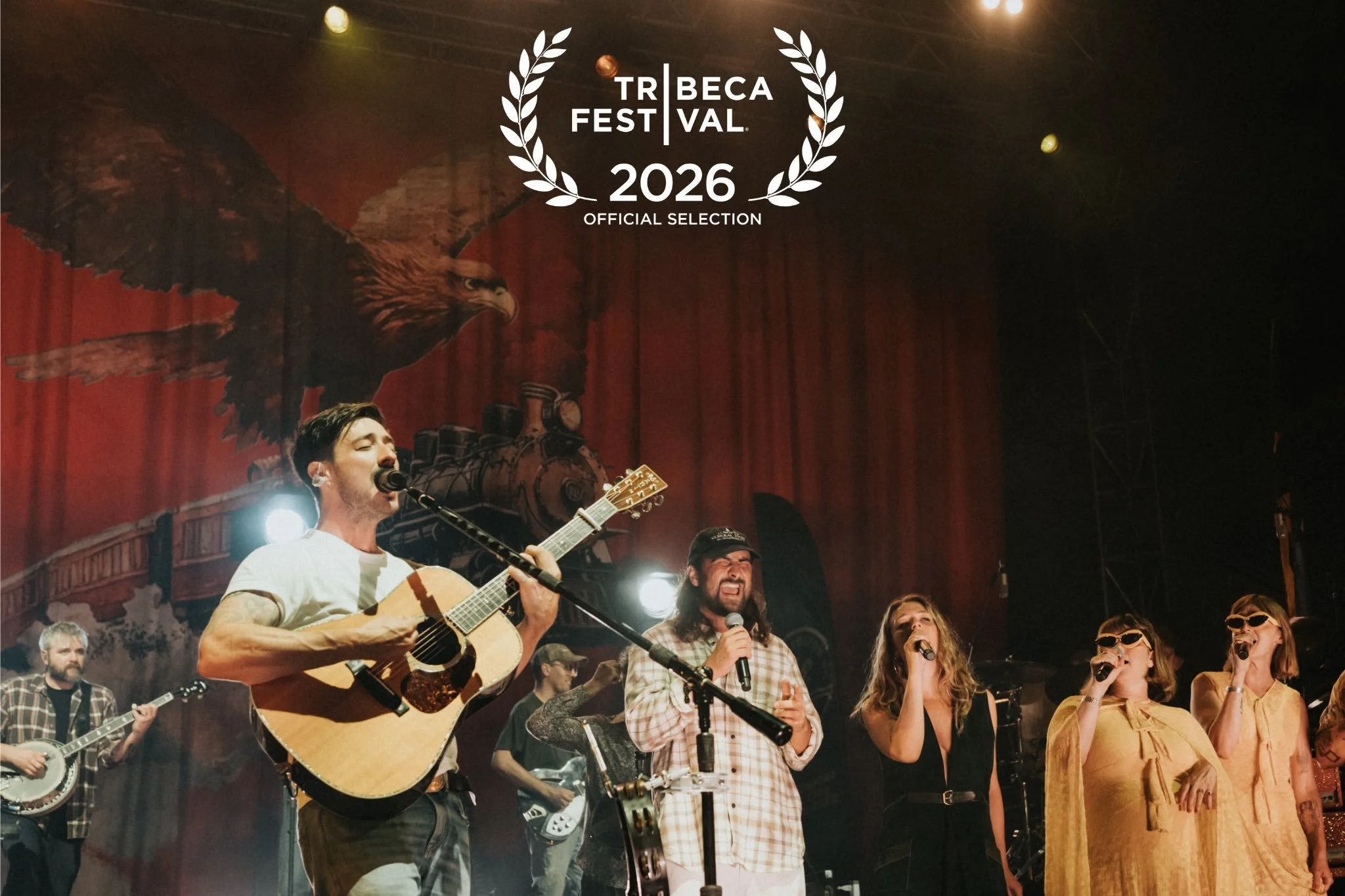
Mumford & Sons: The House Band made its world premiere at the Tribeca Festival on June 12. Filled with creative chaos, unexpected covers, and impromptu performances, the film offers a rare look at musicians creating and connecting away from traditional stages.
Ahead of the premiere, we spoke with director Sam Jones — an acclaimed photographer, filmmaker, and music video director whose credits include work with Tom Petty, John Mayer, Cold War Kids, and Wilco. He has photographed figures such as Barack Obama, George Clooney, Bob Dylan, Kristen Stewart, Robert Downey Jr., Amy Adams, and Jack Nicholson for publications including Vanity Fair, Rolling Stone, Esquire, GQ, Time, and Entertainment Weekly. Jones is also the photographer behind the iconic cover image of Wilco’s landmark album Yankee Hotel Foxtrot.
In a conversation between Sam Jones and Pavel Snapkou, Editor-in-Chief of Showbiz By PS, Jones discussed the importance of trust in documentary filmmaking, the challenges of authenticity in the age of social media, the future of concert films, and the music documentaries that have inspired him the most.

PS: Hi Sam, thank you so much for taking the time to talk with us today. I’m really excited to speak with you about the documentary and the process behind it. This isn’t your first collaboration with Mumford & Sons, so I was curious: how did the idea for the documentary series originally come together?
SJ: I got a call from Marcus. He’d been thinking about this train tour for a while, and they decided to put it together. They knew they wanted to film it, but they didn’t really know exactly what they wanted to do. So we had a few conversations about it, and ultimately, because I’ve worked with him and the band in the past, there was already a level of trust. They knew I’ve spent a lot of time around musicians, and that we have a good relationship. I think Marcus just felt like, “I can take this off my plate if I ask Sam to come and do it”. It’s a strange thing, doing a documentary where you’re also inviting other musicians along. I think Marcus wanted to make sure the film element didn’t take away from the experience the musicians would have on the trip, with him as the host of this whole thing. I think asking all these musicians he admires to come on this unconventional tour, which had a lot of risk and improvisation involved, meant he could also say: “The director is someone I’ve worked with before and I trust”.
PS: You mentioned something really important about trust, and that’s actually what I wanted to ask you about. When you’re making a backstage documentary like this, how do you balance honesty with respecting people’s privacy? Because you’re not only showing what happens on stage, but also what happens behind it — and that’s a pretty intimate process.
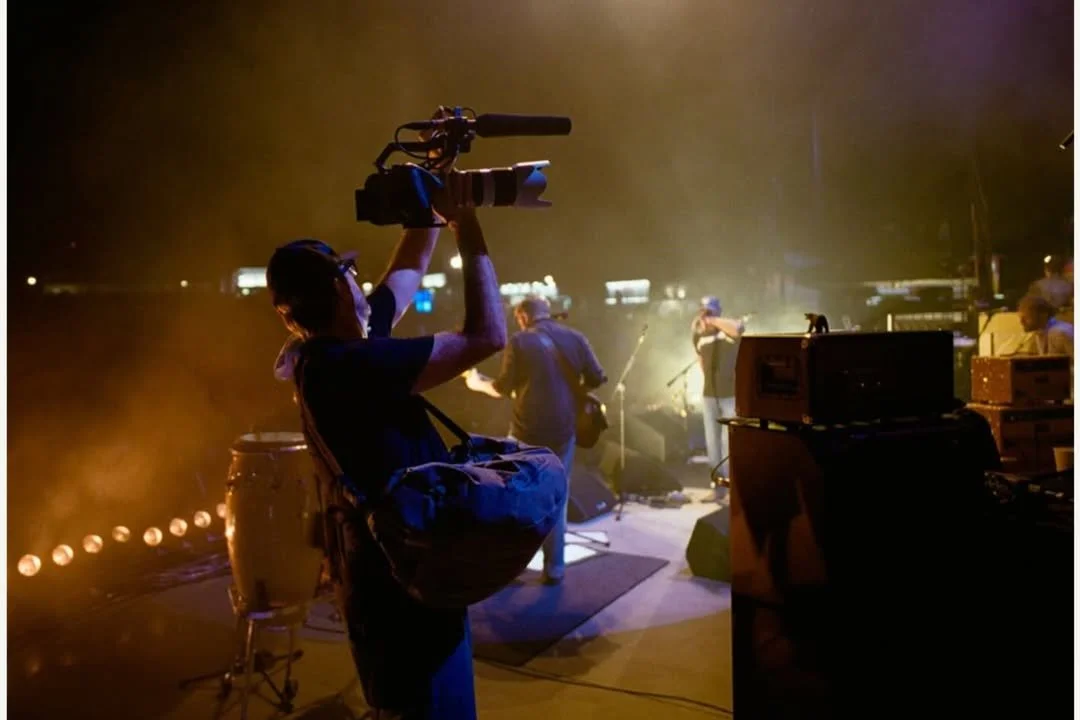
SJ: Human nature and basic human respect and decency have to play into anything collaborative. Beyond that, we prepared everyone coming on the train to know there would be cameras everywhere. It’s a two-way street — I would try to let them be musicians and do their job, and hopefully they would let me be a filmmaker and do mine.
But it really comes down to the subtleties of knowing how to be in a room full of musicians. Honestly, I don’t think about it too much when I shoot. I just try to be the same person no matter who I’m with. I think I’m a trustworthy person, and I try to have decent human instincts, and I hope that comes across. There wasn’t really any major trepidation beyond what you’d normally expect when there are cameras involved. But we’re also in a different era now compared to when I started making films. My biggest issue on this project was actually getting people to stop constantly having their phones out filming things — because no one really wants to watch a film full of other people holding up phones.
At the same time, we’re in a moment where everyone wants to capture everything. You go on a once-in-a-lifetime train journey, something incredible happens, and the instinct is to pull your phone out immediately. So going in, we had a big Zoom call with all the musicians about a month before the shoot, and I asked everyone to try to roll things back a bit — to a time before phones — and just be present.
Everyone loved the idea. But as it turned out, when you’re a musician trying to learn 35 new songs, there’s no better tool than the phone in your pocket. It becomes your lyrics sheet, your reference, your way of learning parts. So throughout the film, the phone becomes a kind of modern replacement for sheet music — which is completely fine. That’s part of the process, and I would never want to change that.
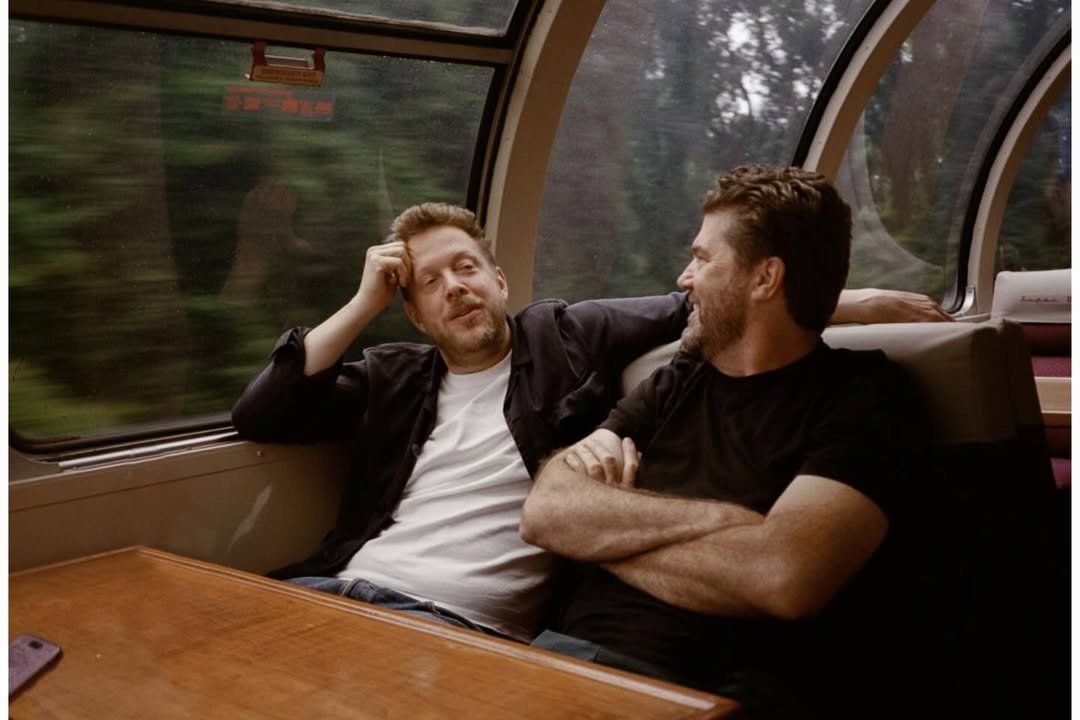
In the end, I hope they also get a travel documentary that becomes part of their own memories. One thing I really cared about was honoring everyone on the train and giving them their moment — showing the audience what it was really like to be around all these incredibly talented people working on very little sleep to learn all these songs. To me, that’s a fascinating human experiment. But it also became a responsibility: not just to make a film for an audience, but to document something for the people who lived it — so they can look back and say, “Yes, that’s how it felt”.
PS: But there’s also the editing side of it. When you’re making something like this, especially a documentary where some personal moments can be involved, do you think artists should be able to ask for certain scenes to be cut — even if you feel they might be important to the story?
SJ: I don’t. I feel — and this is something that was told to me, I didn’t make it up — but I’ve always believed that we make documentaries about people, not for people.
It’s getting harder with technology and the way we now share everything, but I think there’s often an expectation from participants that they should be able to look at something and feel ownership over it — to say, “I don’t like that part of me. That makes me look callous, impatient, or not at my best,” and then ask for it to be removed. But I think if you give into that kind of vanity, fear, or insecurity, you don’t end up with much of a film.
Ultimately, it comes down to trust between collaborators and how everything is set up from the beginning. In my case, because I had a previous relationship with Marcus, Ted, and Ben, we had already discussed it. The idea was: if you come in and start removing everything you don’t like about yourself, then how can everyone else in the film not be offered the same privilege? And if you do the math — there are 23 musicians on the train — if each of them had a pass to remove anything they found unflattering, we’d be left with a five-minute film.
That said, it also places a responsibility on me to present things honestly and not shape the edit in a way that distorts reality or prioritizes drama over what actually happened. We’re in an interesting time where we have the tools to make anyone say anything or reshape anything. I almost think there should be some kind of filmmaker’s stamp that says: this reflects what actually happened.
Because if audiences stop trusting that, we lose something important. Not that this film is curing cancer — it’s a film about musicians on a train — but the principle matters. Any tool like this has to be used carefully.
If someone said, “You can make the film, but everyone gets five personal edits”, I’d probably pass. On the other hand, if Marcus saw something and said, “This one moment is really difficult for my family”, of course I would consider that. It’s always a balance.
But in general, I want to be a filmmaker that audiences can trust — where they know the film isn’t being shaped by the subjects or the financiers, but by the filmmaker. Those are the kinds of films I want to watch.
I did a film about Tony Hawk a few years ago, and when I showed it to him, we had a long conversation about what should or shouldn’t be included. What it comes down to is this: what we like about other human beings is that we can relate to them because we see ourselves in them. If you erase all the imperfect parts, you’re left with something artificial. And then no one can relate to it. Everyone loves superhero movies, but no one watches them thinking, “That’s me.” What we respond to in documentaries is imperfection — people who make mistakes, who fail, who are human. That’s what makes connection possible.
And this is why I keep talking about it — because it’s a really important issue. Making documentaries is difficult, and as subjects become more involved in shaping their own image, especially in the age of social media, the conversation gets more complex.
There’s a journalist who said that when you finish an in-depth profile of someone, you don’t want a thank-you letter, but you also don’t want a letter from a lawyer.
PS: Especially now, with social media, when everyone is trying to document their life on their own terms, there’s this kind of obsession with being perfect in every situation — always being “right,” and never saying the wrong thing. So I think it’s even more important to make documentaries that show the truth — even when it’s not polished.
SJ: Yeah, “polished” is a good word. And I think that’s my job as a documentary filmmaker to say, okay, there’s a place for content where someone wants to make a very polished piece about their life. But there’s also a place for creating something honest that people can relate to. And that’s what I’m interested in.
PS: We’ve also been seeing a big comeback of concert films and music documentaries, especially with streaming platforms getting more involved in the process. Why do you think people are connecting with this kind of work so much right now? Because even though we have social media and can see our favorite artists almost every day, there still seems to be a huge demand for projects like this.
SJ: When you put a frame around something, you’re guiding the audience toward what you want them to focus on. That’s what storytelling is.
If I were a caveman who had gone out on a hunt and came back, I probably wouldn’t tell everyone about the moment we stopped to drink water or take a nap. I’d tell them about chasing the beast. And I’d decide how to tell that story. Maybe I’d start by saying we heard rustling in the bushes and didn’t know whether it was Jerry taking a piss or the beast itself. As a storyteller, you’re making a million decisions to take your audience on a journey.
When you go to a concert and hold up your phone, you’re not really making those decisions. You’re gathering footage and collecting raw material. And that’s where it ends for most videos online. Someone goes to a Billie Eilish concert, stands in the front row, records it on their phone, and uploads it. But that’s not filmmaking.
What a filmmaker can do is create something that translates how it actually felt to be there. And if that filmmaker is skilled, they can guide you toward the elements that build a larger narrative. In a world where we’re often on our own and constantly looking at our phones, experiences like concerts almost become more special because they offer a chance to disconnect for a while. So I think a well-made concert film can recreate that feeling in a way that simple footage can’t.
Sure, you can type “Foo Fighters” into YouTube and watch concert clips for the next seven days. But if someone makes a great film about the Foo Fighters, they can leave you with something lasting. Ideally, you come away feeling like you understand the band better, understand the music better, or maybe even understand what it feels like to be a musician.
My guess is that as more of our experiences move online, we’re looking for stories that make those experiences more meaningful.
PS: Do you think these kinds of concert films and music documentaries are increasingly moving toward streaming platforms, or do you think there’s still an opportunity to attract audiences to cinemas with projects like this?
SJ: Attracting cinema goers for anything is hard right now.
PS: True.
SJ: I go to a lot of movies in the theatre. That’s something I’ve always done, and I love it. Sometimes I’ll go at 2 p.m. and there are only seven or eight people in the room, and it feels like you’ve got a giant film to yourself. But it can also feel scary when you think about the business side of it — you wonder, where is everybody? And of course, people are at home. I watch films at home too.
I think it’s generational. If each generation puts less value on a shared experience, then eventually the original reason that experience existed starts to get lost. We become too far removed from what it felt like to be in a room full of people all reacting at the same time — like everyone gasping at the shower scene in Psycho.
Most filmmakers — except maybe people who really demand a big-screen experience like Paul Thomas Anderson or Christopher Nolan — are probably just happy their work is being watched at all. I just hope people aren’t watching it while sitting on the toilet or scrolling their phone. We’re just happy to make something that’s seen, because that’s why we started in the first place. Of course, I’d love for every film I’ve ever made to be watched in a cinema. That would be amazing. But it’s just not the reality.
PS: And for many people, it’s also the only way to experience a concert in a shared setting — to react together, sing along, and actually feel part of something, rather than just watching it alone at home and bingeing it.
SJ: Right. And I think the irony is that we keep developing better and better tools to capture these experiences — with multi-camera setups, drones, everything. We can create incredible things. But increasingly, the question becomes: how do you get an audience to actually focus on it?
I think even more than the venue — whether it’s a theatre, an iPad, or a TV — the real question is attention. How do you get people to put everything else aside? Because what you get out of an experience is what you put into it.
I know that myself now. I get distracted a lot more than I used to. If I’m reading a really good book and my phone is next to me, no matter how good the book is, I might still pick up my phone. But if I put it in another room, I have a completely different experience. And that’s my responsibility, not the author’s. It’s not the author’s job to make a book so good that it can compete with a notification. It’s my job to remove the distraction.
So as filmmakers, the question becomes: is anyone actually giving the film their full attention? That’s all we really hope for — whether it’s two minutes or 200 minutes. And honestly, that’s the hardest part. That’s a bigger challenge than getting people into theatres. That battle is kind of lost. People will go if they’re the kind of people who go.
It’s scary. There’s all this talk about vertical formats, and films being adapted into vertical viewing, and then micro-episodes that are two minutes long. And eventually, you imagine a version of cinema that’s just flashes of images while someone is walking to the bathroom — and that’s the “film”. That’s the most cynical, dystopian version. Hopefully it doesn’t go that way.
Anyone who’s ever been through filmmaking — post-production, colour grading, sound mixing — knows how much care goes into it. So when you’re sitting with someone and they look down at their phone, or even just start eating a salad and look away to find a crouton, it feels like a personal offence. You just want to say, “What are you doing?”
That’s why, for me, having this film at Tribeca — with a captive audience actually sitting in a theatre and watching it — there’s no better version of what we do.
PS: If you had to recommend concert films or music documentary series for our readers, what would they be?
SJ: Well, it’s hard to beat The Last Waltz with The Band.
My all-time favourite music documentary is probably Don’t Look Back from 1967 about Bob Dylan. It was the first time, I think, that cinéma vérité filmmaking met such a unique subject. There’s something almost magical about watching a young artist still figuring out fame, responsibility, and accountability in real time. It’s an incredible film.
32 Short Films About Glenn Gould is a great film. It’s not strictly a documentary, but it has documentary elements, and I think it really broke the format open in terms of what a music film could be. There’s also a CBC documentary about Leonard Cohen, when he was transitioning from being a poet to becoming a musician. That one is really fascinating.
I think a lot of the older documentaries draw me in more, because there wasn’t the same awareness from the subjects that they were part of making a film. So much of documentary filmmaking today feels compromised — with the executive producer also being the subject, or the financier, or the record label funding the project about the artist who is also an executive producer. In that sense, a lot of documentaries now feel more like narrative constructions. They’re built like fiction, and often there’s already a script in place before filming even begins. Whereas with some of these older films, there was just less awareness. It was more like: “You’re the filmmaker, sure, you can come along.” There wasn’t this idea of, “If I do this documentary in the right way, I can monetize it or build my brand”.
PS: Probably a lot fewer NDAs involved.
SJ: I mean, you don’t really see a Grey Gardens these days. People are just too self-aware now — and that’s fine. But I think we lost something with that self-awareness.
Even I’ll say: the first documentary I ever made, I shot on 16mm film. There was no monitor, no playback. I spent 14 months filming it, and the band never saw a single frame, so they had no idea how they were being captured. It was before iPhones, so after a while I was just a guy holding a weird black box with a lens on it. You can’t really have that anymore — you can’t have a camera that truly functions as a fly on the wall. And that’s okay, but when you watch some of those early music films… I mean, I thought Peter Jackson’s eight-hour Beatles documentary (The Beatles: Get Back) was great. Not because he shaped it into something overly constructed, but because he left everything in.
I also saw It’s Never Over, Jeff Buckley, which I thought was really interesting. It’s a hard film, because there’s so much speculation involved when you’re dealing with someone who died young. What I think the film did well was keep the questions open about who he was, rather than trying to define him too neatly.
Pavements — the movie — breaks all the rules of documentary filmmaking, and in the best possible way.
PS: Thank you so much, Sam. I can’t wait to see the film, and I hope our readers will see it as well. Good luck with your premiere!
Thanks to Live Nation Studios and the Tribeca Film Festival for the opportunity to speak with Sam Jones. Catch Mumford & Sons: The House Band at the Tribeca Festival and follow its further journey with Live Nation Studios.Photo credits: Sam Jones Instagram / Tribeca Film Festival / Live Nation Studious 