The Devil Wears Prada 2
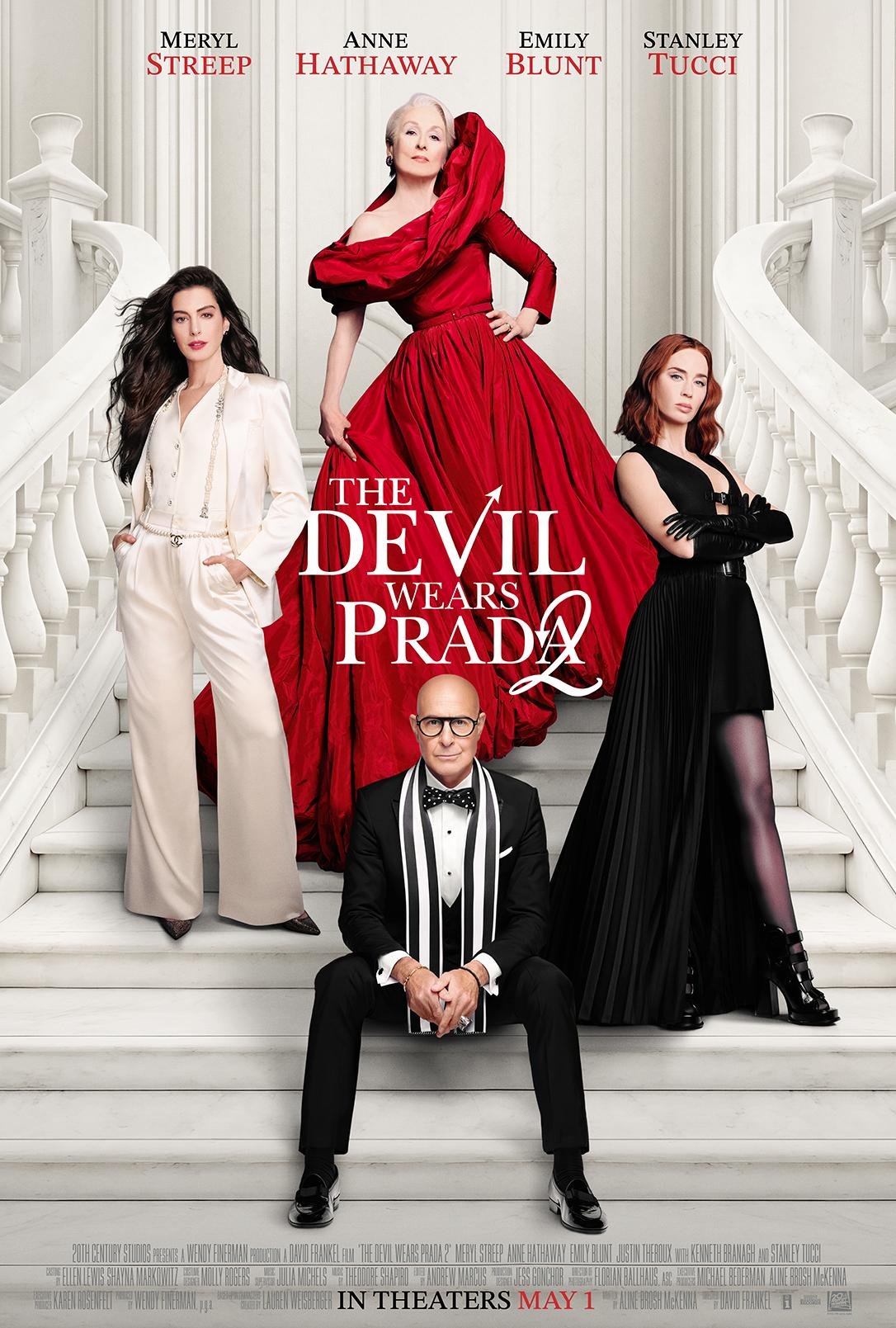
Maybe The Devil doesn’t wear Prada anymore, but it’s definitely not H&M either.
It’s hard for me to put into words just how much I love The Devil Wears Prada (2006). It’s one of three films I know by heart in two different languages. Of course, it’s deeply tied to my childhood, but it’s also just embedded in my brain because it’s one of the biggest and most culturally established phenomena of the 2000s when it comes to mainstream cinema. It’s a reference film — one that people still instantly recognize, one that still feels relevant and continues to spark discussions online, especially as, over time, with the evolution — and sometimes degradation — of our society, the way we look at the characters and their actions keeps changing.
So when I heard that The Devil Wears Prada 2 was happening, you’d think I’d be excited. The feeling was the exact opposite. I’m one of those people who absolutely does not like sequels, prequels, or remakes of something that’s been out there for 15+ years. We all know why they exist, and the money side of it doesn’t scare me. What scares me is that most of these things turn out terrible. And honestly, the set photos and trailers didn’t inspire much confidence either.
The sequel follows Andy Sachs, who, after losing her job at a prestigious publication where she was winning journalism awards, gets a chance to return to Runway as an editorial writer. She’s brought in because the magazine, and its face, Miranda Priestly, are caught in a massive scandal that costs them advertisers. In an attempt to fix things, Miranda and Andy meet with a representative from Dior, one of the key advertisers — and that representative is Emily, Miranda’s former assistant. What starts as a damage-control mission quickly spirals into something much bigger, as the very existence of Runway and Miranda’s position as editor-in-chief come under threat. Different characters reveal different desires and traumas tied to their work, and what we get is a story about trying to save a legacy publication in the middle of a modern media train wreck — and the death of journalism as we know it.
I hate to admit this, but the nostalgia bait… kind of worked. I can’t say the film is great, but it’s not bad. And in today’s world of sequels, that already feels like a win. Is it blatant nostalgia bait? Yes. Do we get a ton of references to the original? Absolutely. The walk-in closet scenes, the New York fashion montages, the handbag gifted to her best friend, the “two almost identical belts” callback in the first 30 seconds of the film — it’s all here. But the key thing is: it didn’t feel cringe.
At the same time, the film feels split into several very different sub-stories, and that affects the quality. The weakest part is definitely the beginning — it leans too hard into comedy, feels overly exaggerated and cartoonish, and the characters start to overact. The humor becomes a bit awkward, and that sharp, intelligent wit from the first film kind of dissolves. It opens like a nostalgic montage reminding you what the original was, reintroducing characters who don’t seem to have changed much. Miranda still runs the show, though she initially feels a bit… dulled. Nigel is still her right hand. Andy, despite becoming a serious journalist, still tiptoes around Miranda. And Emily is here to introduce us to the shameless Dior advertisement spot.
But then the film starts to open up and dig into something deeper — modern industry realities. Yes, the themes are pushed to the max, but it honestly shows how consolidation is killing art and journalism. People don’t want to read anymore — everything is about clicks, traffic, ad conversions. Traditional media is struggling to survive, especially with people in charge who came from a completely different era, where a single photoshoot could mean a week-long trip to Africa and insane budgets that might get scrapped anyway. Here, we see a world where journalists can lose everything overnight, no matter their status.
We follow characters who sacrificed everything to become power figures, now stuck in a system that might not need them anymore. One of them becomes so broken and bitter that they try to seize control of Runway at Miranda’s weakest moment. Another reconnects with their younger self, their insecurities, but realizes that good work still matters — and becomes key to saving the magazine. Someone else questions whether they’re capable of more after being comfortable for too long.
And then there’s Miranda. She’s no longer the unbreakable mastermind from the first film. She’s kind of tired — someone who doesn’t fully understand or accept the reality. In this film, she’s almost like Queen Elizabeth II — wondering when the right moment is to leave the throne, and how to do it without watching everything she built burn to the ground. But eventually, she recognizes the value of the people around her — the ones who actually understand her vision and sacrifices. She even is the one who suggests to Andy to say yes to the book deal she’s been offered and to write the whole truth about working with her — which of course nicely rounds up the story of the real book by Lauren Weisberger that inspired the original film.
This film is far less dreamy than the original. Instead, it gives us scenes that feel like direct reflections of the madness of the modern world — especially in journalism. Billionaires casually destroying institutions that took decades to build. Brilliant people who are left with nothing just because the bosses are restructuring their assets. The brutality of power. But also, on the other side, we’re now watching a female lead not trying to impress a man — instead, looking to find an equal partner, someone on her level.
Yes, there are a lot of cameos, some very on-the-nose, almost pretentious scenes clearly designed to go viral with “OMG, GAG, SUCH A SLAY” captions. Andy walking around in a Björk T-shirt. A short but memorable appearance by Lady Gaga as a funny antagonist who absolutely hates Miranda — and is hated right back. The film is very “of its time” — packed with modern tracks by Miley Cyrus, Olivia Dean, Dua Lipa and Laufey, while still holding onto “Vogue” by Madonna as its anchor.
It doesn’t feel as timeless or iconic as the original. But honestly, when something is that big, catching up to it is not an option.
Still, it’s genuinely nice to see the full cast back. Meryl Streep is Meryl Streep — you already know. Anne Hathaway slides back into Andy effortlessly. Emily Blunt overacts at times, but is still fun to watch. Stanley Tucci is absolutely fantastic as Nigel — he becomes this kind of hidden fairy godfather of the film, a truly essential presence. The new additions work well too, including Simone Ashley and Patrick Brammall. They all look great, they feel comfortable, like they’re enjoying themselves — and that, even slightly, wins you over.
In the end, The Devil Wears Prada 2 might not be a triumph, but it’s a well-deserved People’s Choice Award. It doesn’t reinvent anything, but it feels like that cerulean sweater Andy wears again — a bit worn out, reshaped, with some flaws, but still painfully familiar. And even if it can’t hit you the same way it once did, it still makes you feel something.
6.5/10
Thanks to Disney Poland for the early press screening.