Calle Málaga
Sometimes the most unexpected things push us to start living life to the fullest.
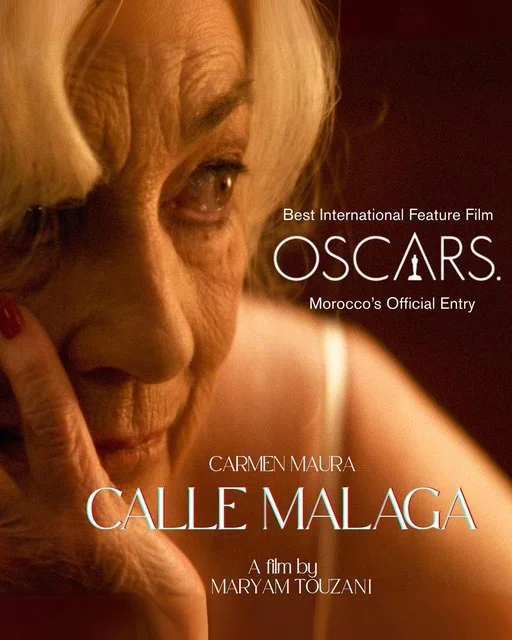
Calle Málaga is Maryam Touzani’s Spanish-language debut, and it’s so universal in its approach and honest simplicity that it’s almost impossible not to fall for it.
The film follows Maria Angeles, who lives in Tangier — a Moroccan city known for its long-standing Spanish expat community. She’s living a comfortable, slow, and well-settled old age. But one day her daughter Clara, with whom she barely communicates, shows up and puts her in front of a fact: she needs money after her divorce, and the apartment Maria Angeles lives in has to be sold. She invites her mother to move to Madrid so she can be closer to her grandchildren, but since Maria Angeles’ late husband transferred the apartment to Clara before his death, the daughter doesn’t really take no for an answer and treats it as entirely her decision.
Maria Angeles refuses to move to Spain but agrees to relocate to a nursing home in her beloved Tangier. She doesn’t last there more than a couple of days. And that’s where her adventure — and, essentially, a new chapter of her life — begins.
The film quickly introduces one of its central themes: the relationship between parents and children, and just how out of sync different generations can be. What feels like convenience and rationality to one side can feel terrifying and completely unacceptable to the other. But this conflict isn’t even the film’s main destination — it’s more of a driving force that sets the story in motion.
From there, Maria Angeles, in trying to reclaim a place that once felt like home, ends up bending the rules a little — sometimes just for the fun of it — and starts living by a simple idea: if life gives you tomatoes, make gazpacho. Through her adventures, she finds a new spark in herself, even though everything comes harder at her age. She meets a man and realizes that love can happen at any moment — and if you stay open to it, it can turn into something genuinely beautiful and romantic.
This is a story about how, no matter how difficult things get, old age is not a sentence. Everyone still has their own life, their own circle — like Maria Angeles’ childhood friend, who became a nun with a vow of silence. That whole sequence is probably one of the funniest in the film. And that’s what really defines it: even though the story deals with heavy things — a distant daughter, losing your home, trying to rebuild from nothing, the struggles of aging — it’s often told with a very sharp sense of humor.
Because of that, the film, already rich with Moroccan-Spanish color — bright, juicy, expressive — becomes incredibly grounded and very close to you. It ends up feeling like a collage of different stages of one life: from family drama to a rebuilding story to something that even leans into romcom territory with her new love interest.
Even though the ending doesn’t tie up every loose end and instead asks you to draw your own conclusions, the film feels very sensitive and very fair in what it shows. And more importantly, it works as a reminder that you can be an adventurer at any age.
8/10
Thanks to Gutek Film for the press screening.